If you read nothing else
- Warm, bright summers, breezy spring and autumn, quieter and cooler winters: the park is a different day out in each, while the caves stay steady all year.
- Midsummer glare off the pale lava is intense, so an early slot, water and shade matter. The coach and the underground sections give you regular breaks.
- Trade winds keep the air moving, so a windproof layer, sunglasses and a way to pin down a hat make the crater road far more comfortable.
- Shorter days and cool mornings, with the volcano and caves day running 9 hours[1] and pickup included.
- Christmas, Easter and half-terms fill fastest, and independent entry to Montañas del Fuego is online only and time-slotted[2].
| Spring and autumn | Summer | Winter | |
|---|---|---|---|
| Air | Warm and breezy, quick to change | Hot with hard glare off the lava | Cool mornings, mild afternoons |
| Daylight | Long, easy evenings | Longest days of the year | Short, so start early |
| Crowds | Calm outside school breaks | Families fill the main weeks | Christmas and Easter are busiest |
| Caves and underground | Steady temperatures inside | A cool midday refuge | Shelter from the wind |
| Tickets | Online only, timed slot[2] | Online only, timed slot[2] | Online only, timed slot[2] |
Nowadays, on the surface the temperatures reach around 250 ºC, and they can even reach more than 600 ºC, 13 m deep.
Our verdict on the best season for the volcano and caves day
What to pack
- Sun hat, sunglasses and sunscreen for the open lava fields
- A windproof layer, plus a warmer one for winter mornings
- Closed shoes with grip for the rocky ground around the craters
- Water, a light scarf and something to hold your hat down in the wind
Timanfaya National Park best time to visit: the short answer
Timanfaya has no bad season, only different ones. In the warmer half of the year the lava fields glow under a hard, bright sky and you want shade, water and an early start. In the cooler half you get softer light, shorter afternoons and a cave section that feels like a welcome change of air. The park is about 51 square kilometers (20 square miles) in size[5], and it was declared a National Park by a decree of August 9, 1974, published in the Official State Gazette on September 17, 1974[6].
What really shapes your day is not the calendar alone but four things: how hot the open ground gets, how hard the wind blows, how much daylight is left afterwards, and how many other coaches are on the same road. The volcano and caves day handles a lot of that for you in one 9-hour run[1], with pickup included and details confirmed when you book, so the weather is the only variable left to think about.
Summer heat and the crater road in July and August
Travellers often ask when is Lanzarote hottest, and the honest answer is that the wind has as much say as the calendar. Midsummer is when the island feels most volcanic: the lava radiates warmth back at you, the pale ground throws light upward, and the open stretches of the Route of the Volcanoes leave nowhere to hide. Independent entry to Montañas del Fuego is sold online only and for a specific time slot[2], which lets you take the cooler ends of the day rather than the middle.
Even when the air feels comfortable, the ground under the park does not. At Islote de Hilario, surface temperatures reach around 250 ºC, and they can even reach more than 600 ºC at 13 m deep[7]. A short walk away, El Diablo restaurant cooks meat and vegetables over natural heat from the subsoil, where temperatures exceed 600 °C just 15 meters below the surface[8]. Stay with the coach or on the marked path, keep drinking water and take the middle hours gently.
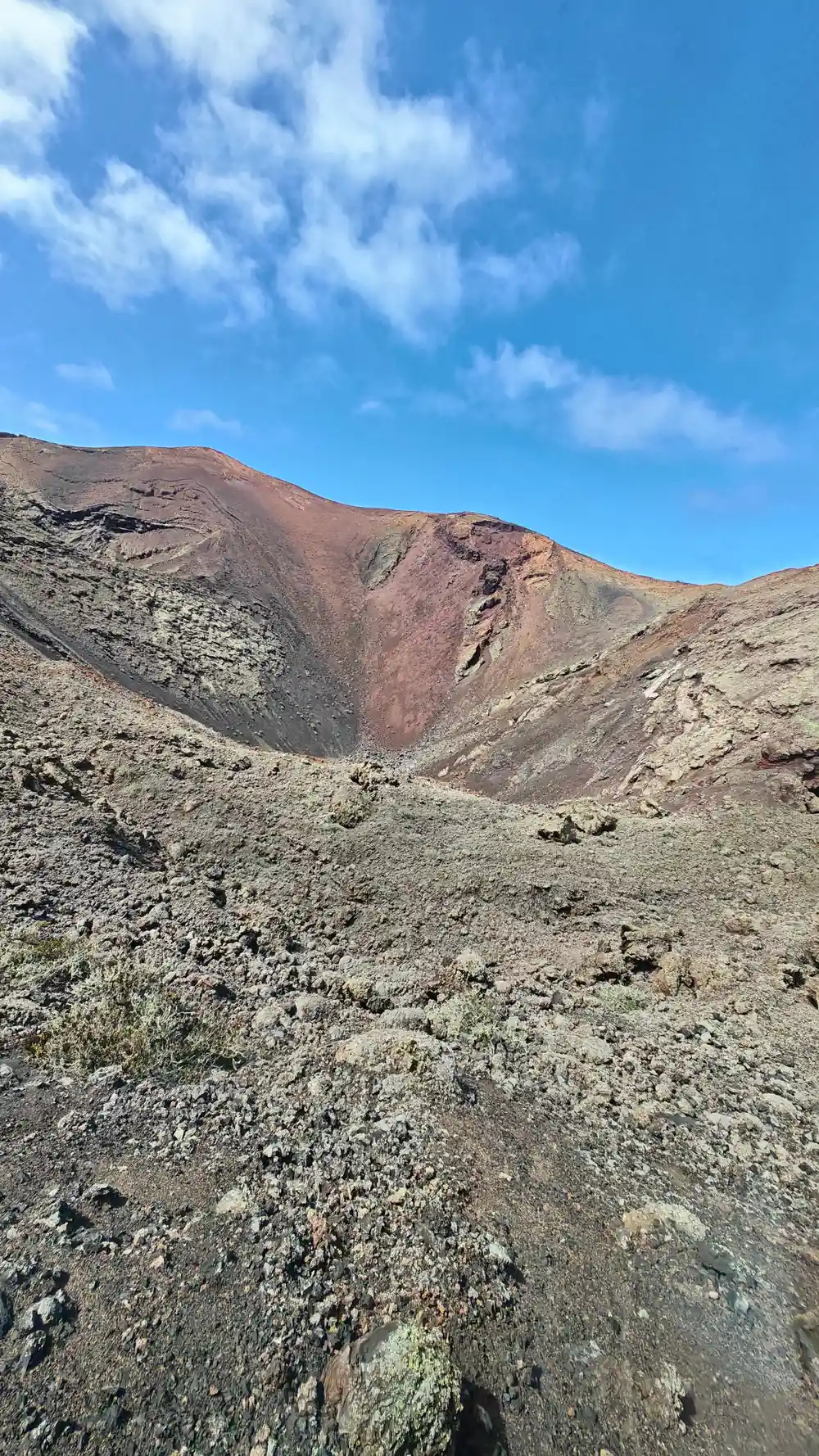
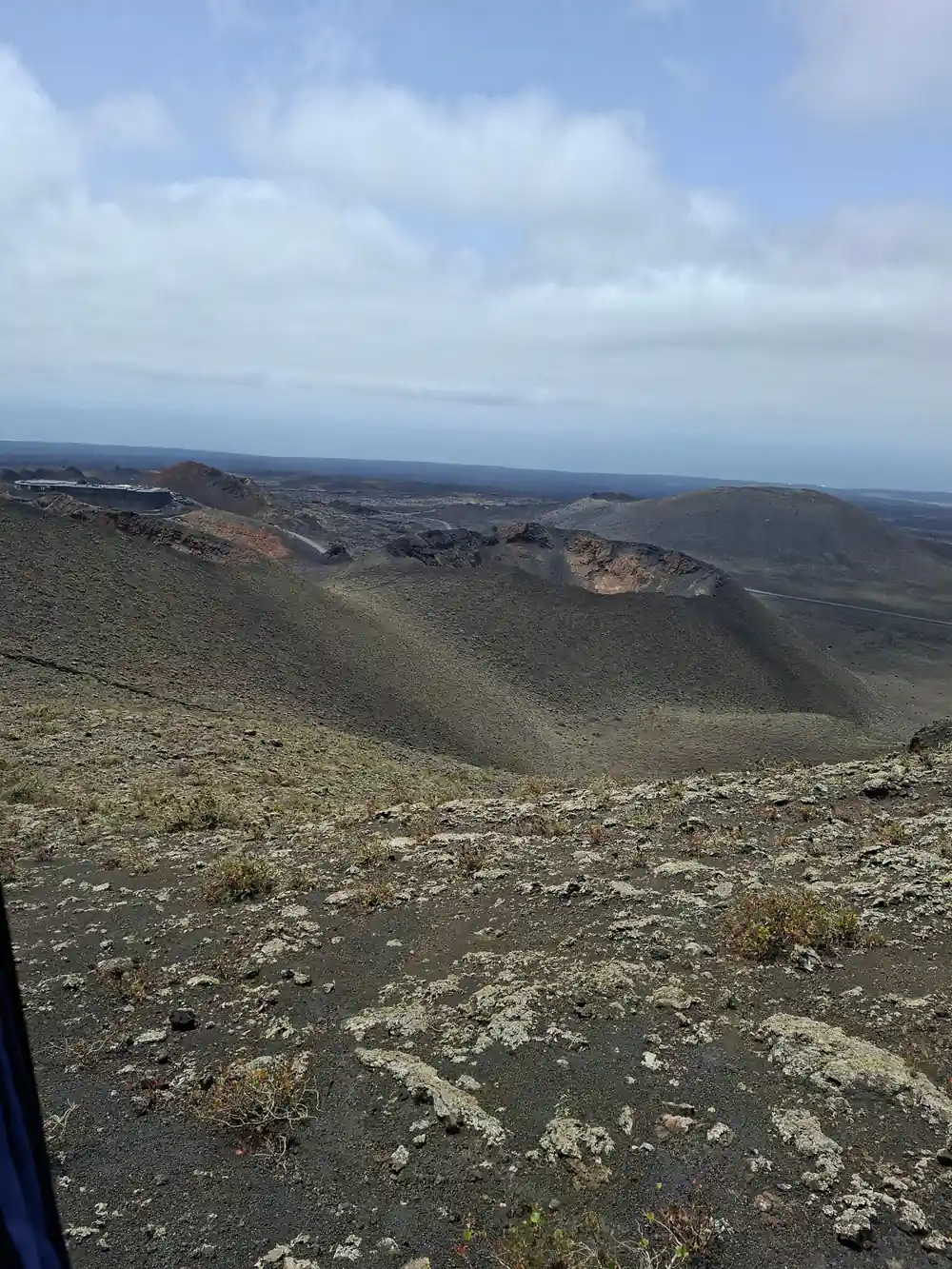
Red rock, low light and a steady breeze: a shoulder season afternoon on the crater road.
Why Lanzarote is so windy, and how to work with it
The answer sits in the Atlantic. Lanzarote lies in the path of the north-east trade winds, and this low, bare island gives them almost nothing to break against. They funnel between the hills, sweep across the malpaís and shape the vineyards at La Geria, where each vine sits in its own hollow behind a low stone wall. The wind is also why the island rarely feels as hot as the calendar suggests, and why the sea can look livelier than the sky.
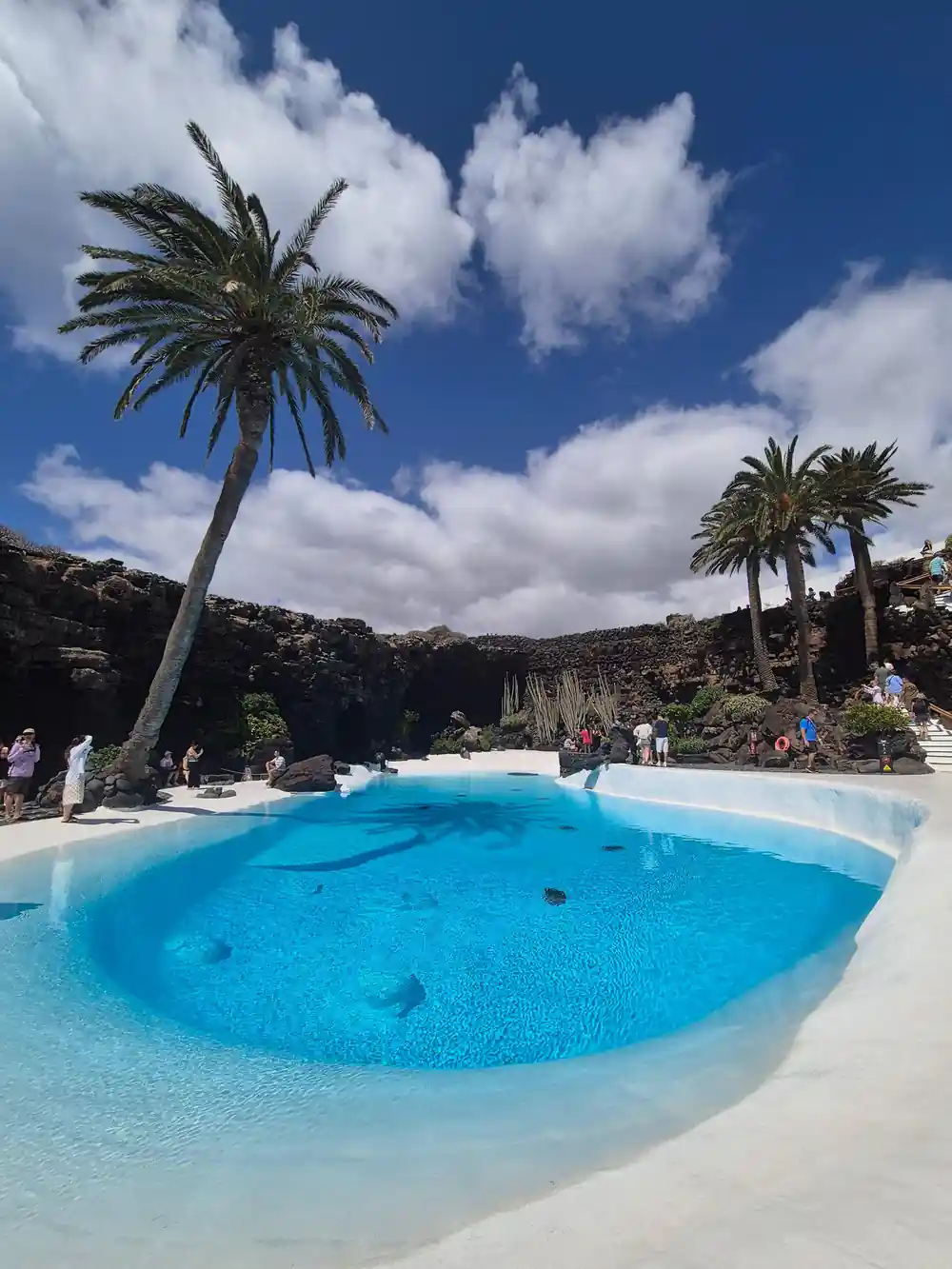
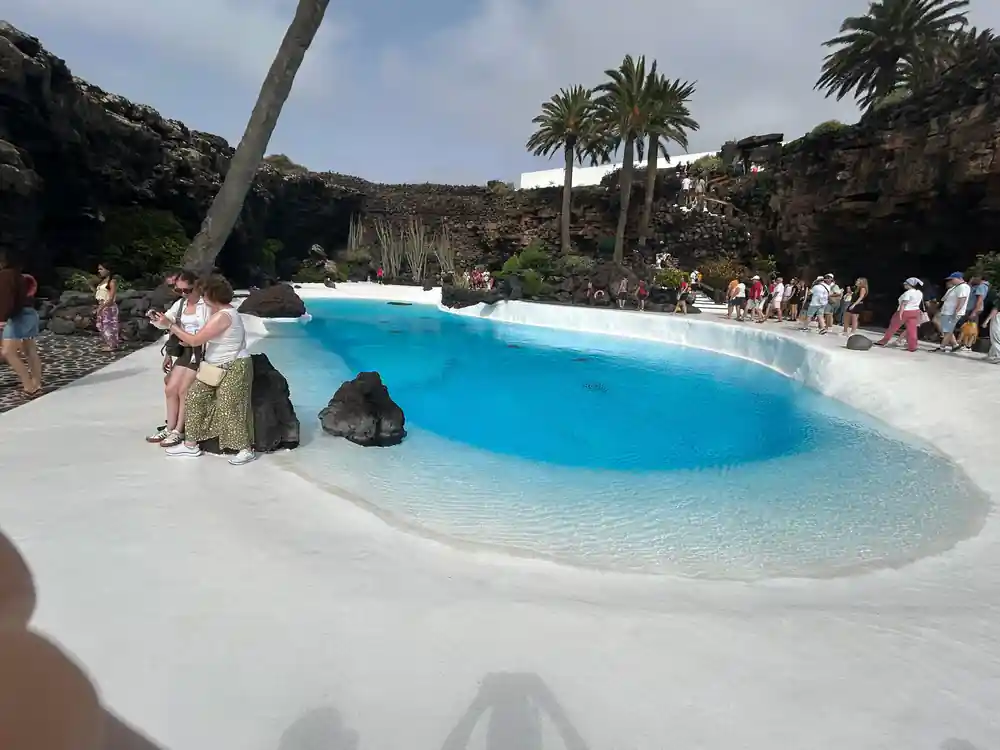
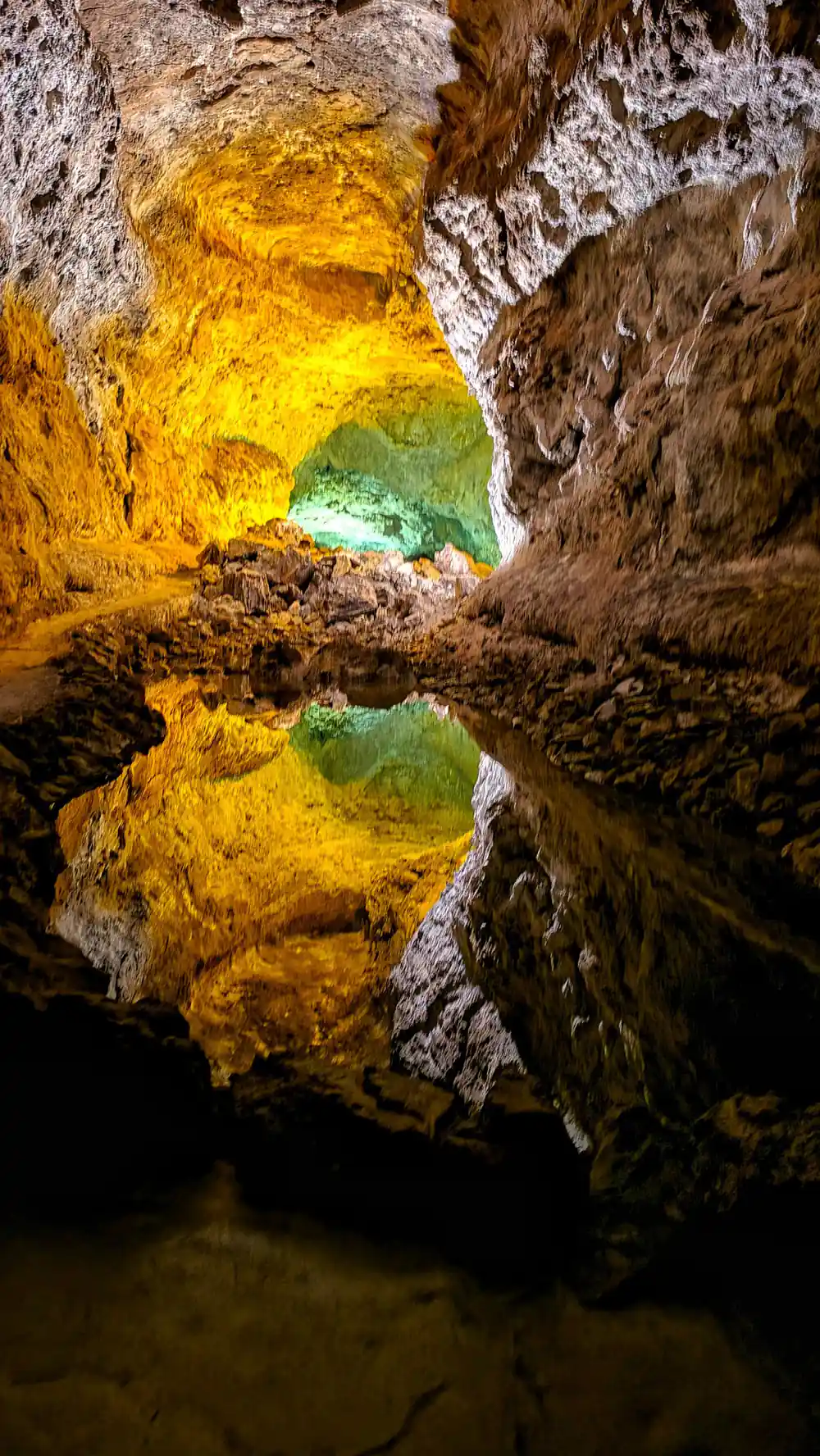
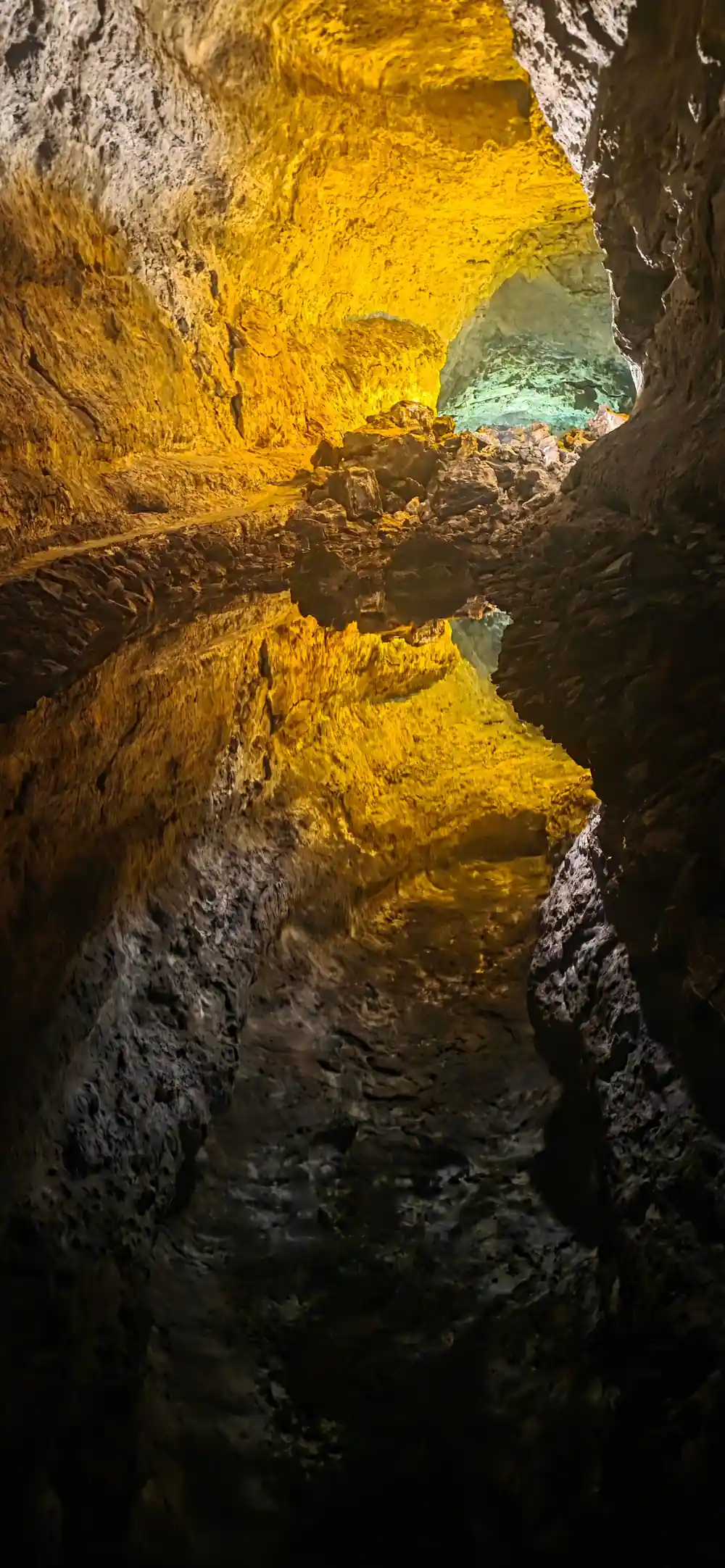
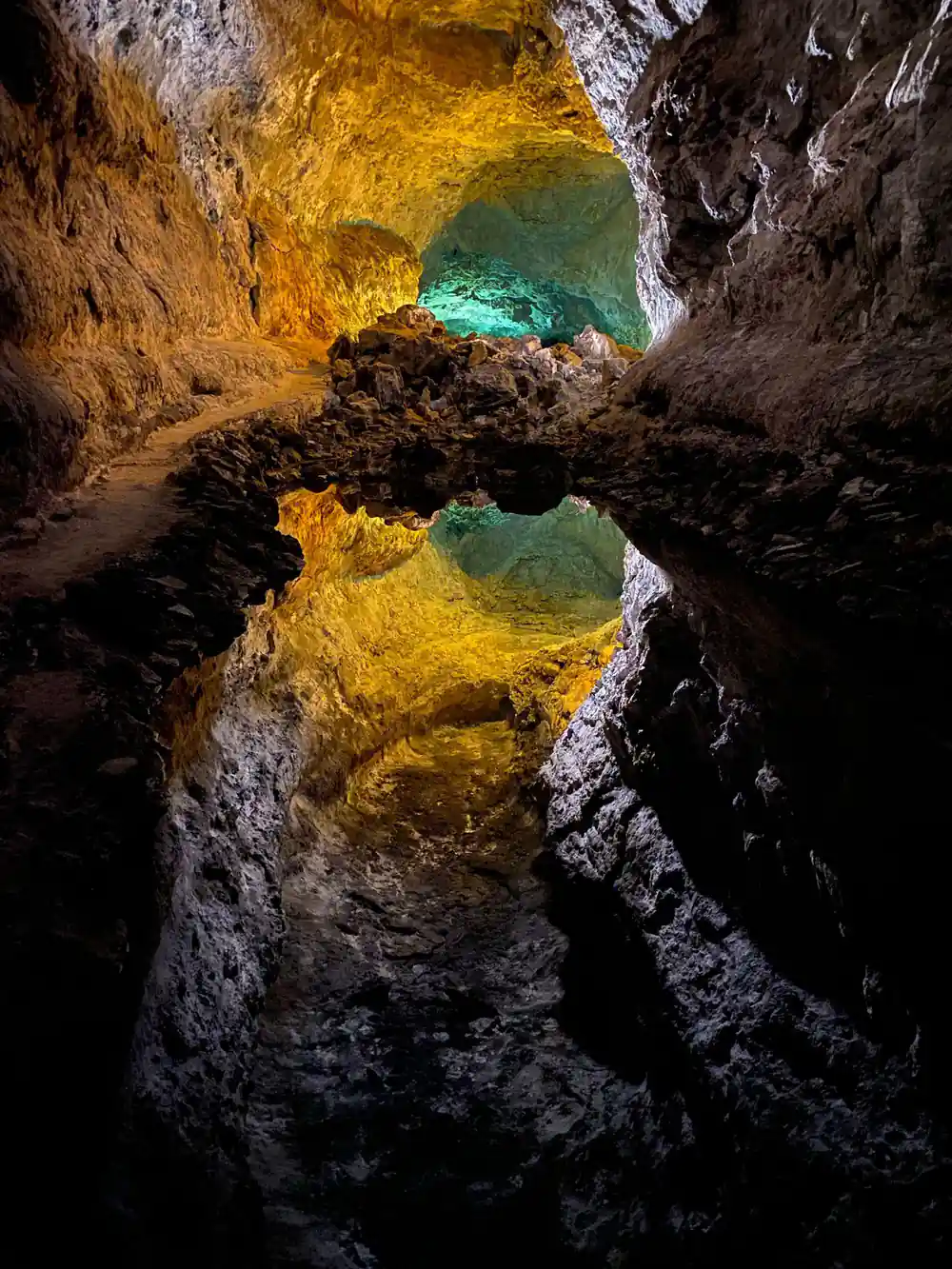
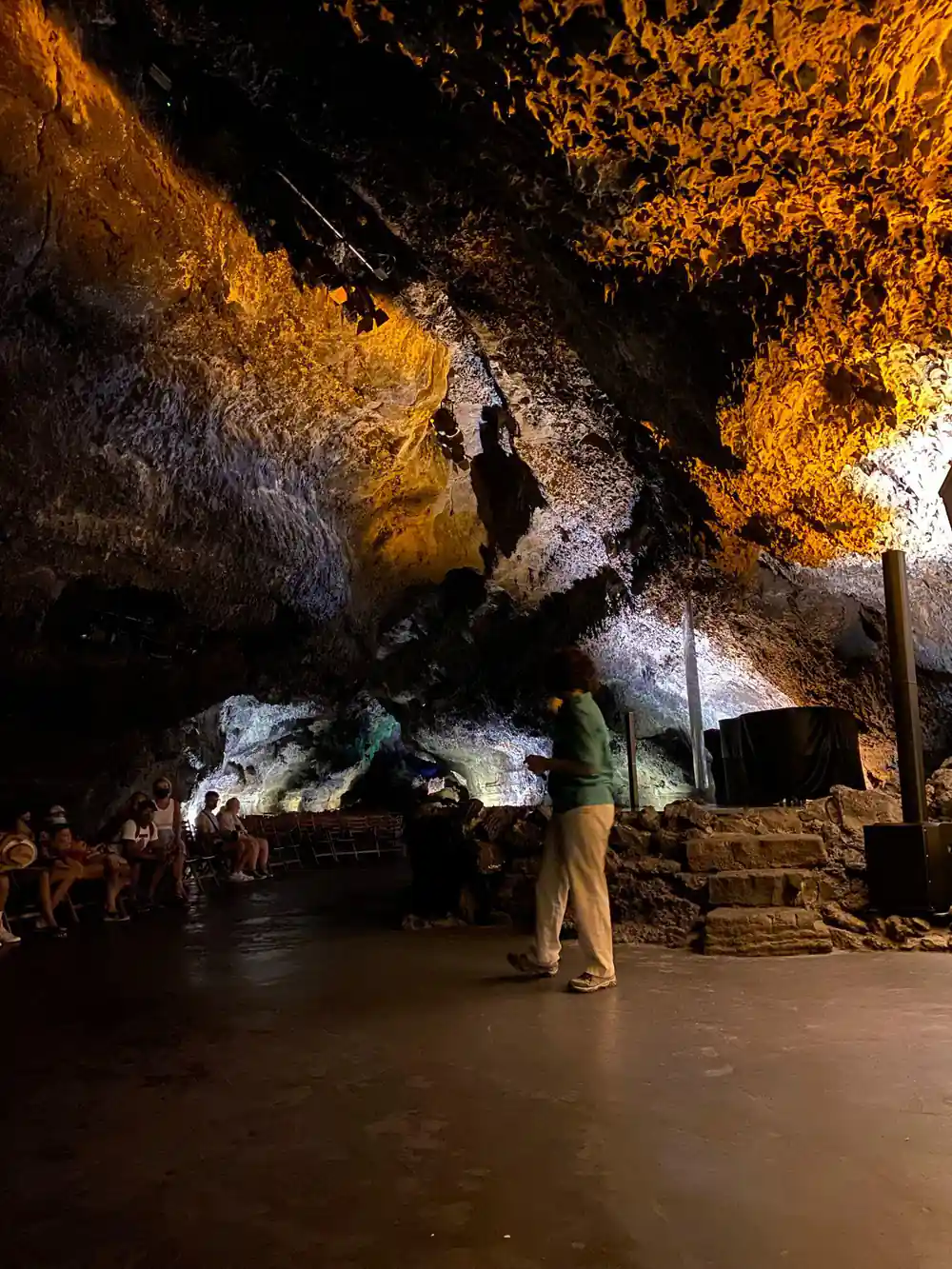
In practice, wind means layers. A thin windproof shell over a t-shirt transforms a breezy crater road, and something to hold your hat down saves a lot of chasing on the coach steps. The underground sections at Cueva de los Verdes and Jameos del Agua sit out of the breeze completely, so a day that starts blustery can end still and calm. If you feel the cold easily, a scarf earns its place in your bag from autumn through spring.
Winter touring: shorter days, cooler air and the caves
Through the winter the island settles into its quiet season. Daylight is shorter, the light is softer, and the lava reads in shades of grey and rust rather than glare. Mornings are cool enough for a jacket, the wind can be brisk and the resorts are calm, while by mid-afternoon you are often in a t-shirt again. The caves stay steady inside, which makes the underground half of a winter day comfortable rather than chilly.
Winter is the season to think about timings rather than temperatures. The volcano and caves day runs 9 hours[1], so a late start in winter means travelling home in the dark. An early pickup gives you the crater road in good light and still leaves time for Cueva de los Verdes and Jameos del Agua before the afternoon fades, and it also means you are back in your resort for dinner.
from US$102
The volcano and caves day runs 9 hours from 61 pickup points and takes in Timanfaya, Cueva de los Verdes and Jameos del Agua.[1]
Spring: what the island is like as the air warms
Spring is the season many repeat visitors quietly prefer. The air warms without the midsummer glare, the light on the lava fields is clean, and the hills behind the coast still carry a little green. The question of when is Lanzarote hot really depends on the wind: a still spring day can feel like summer, while a windy one feels like early winter, all within the same week. Pack for both and you will be comfortable either way.
Spring is also a good time to build a slower day around the park. Local bus line 60 passes through Yaiza on its route between Arrecife and Playa Blanca[9]. From Puerto del Carmen the park is about 22 km away directly, with a road distance of about 23.5 km[10], so a morning tour leaves the rest of the day free. If you are island-hopping afterwards, Teide on Tenerife rises to 12,188 feet (3,715 meters) and is the highest mountain in Spain[11].
Rain, calima haze and visibility over the lava fields
Rain is rare here and rarely lasts, but it does arrive, usually in short winter spells. When it does, the malpaís darkens to deep black and rust, the air smells of wet stone, and the crater road takes on a strange, moody beauty. Far more common is calima, the fine Saharan dust that drifts over on certain winds, softening the horizon and turning the sky a milky yellow. On those days the long views from the park shrink and the sun feels hazier.
Neither is a reason to abandon your plans, but both are worth checking before you set out. On a hazy or damp day the underground section comes into its own, since Jameos del Agua and Cueva de los Verdes do not depend on a distant view. The bare ground has stood in for other planets on screen: Enemy Mine, Krull, Mission Stardust, Stranded and Operation Ganymed were all filmed in Timanfaya[12]. A little haze over the lava simply adds to the effect.
Crowds at Christmas, Easter and the school holidays
The busiest weeks are the ones you would expect: Christmas and New Year, Easter, and the half-term holidays when families travel together. Cruise calls add pressure on individual mornings, with coaches moving in convoy along the same routes. Dates in those periods are the first to fill on any guided day, and the crater road can feel like a queue rather than a landscape if you land in the middle of it.
Outside those weeks the park is easy to enjoy. Independent entry to Montañas del Fuego is online only and tied to a specific time slot[2], and the tour booked from this site comes with free cancellation up to 24 hours in advance[1], so you can commit early and adjust if the weather turns.
Before or after your park day, the visitor centre at Mancha Blanca gives free access to its exhibition and audiovisual programme[13] and opens Monday to Sunday from 9:00 to 16:00[3]. You can also add the camel ride, which lasts approximately 20 minutes[14], or the Termesana Route, which brings you close to the volcano and the culture of Lanzarote's inhabitants during the 1730-1736 eruptive period[15].
Heat under Timanfaya at three depths
Surface and 13 m figures come from Geoparque Lanzarote[7]; the 15 m figure is from the El Diablo restaurant page[8].
Volcano and caves day options, from-prices per adult
Adult from-prices as listed; child rates are not shown for these listings.[1][16][17][18][19]
When to book the volcano and caves day
Plan around the season
Check the calendar first
Look at school holidays and cruise days before you fix a date, then choose the shoulder weeks if you can be flexible.
Choose your start time
Independent entry needs a set time slot[2], and the guided day runs 9 hours[1], so choose your start time carefully.
Pack for two seasons
Sun cream and a hat, plus a windproof layer and something to keep the sun off your neck on the open lava.
Leave room for the caves
Jameos del Agua and Cueva de los Verdes sit underground, so keep them in the plan even on a hazy or damp day.
Book with free cancellation
The volcano and caves day can be cancelled up to 24 hours in advance for a full refund[1].
Pick your week and reserve the volcano and caves day
from US$103Reserve now & pay later