If you read nothing else
- Two lava tube sites in the north of the island: Cueva de los Verdes, a tunnel you walk through, and Jameos del Agua, where the tunnel meets art and water.
- The tour booked from this site runs for 9 hours and takes in Timanfaya National Park, Cueva de los Verdes and Jameos del Agua, with pickup from 61 location options.[1]
- Tickets for independent entry to Montañas del Fuego are online only and for a specific time slot, so plan the timing before you travel.[2]
- Light layers and grippy closed shoes. The tunnels stay cool and damp even when the coast outside is hot and bright.
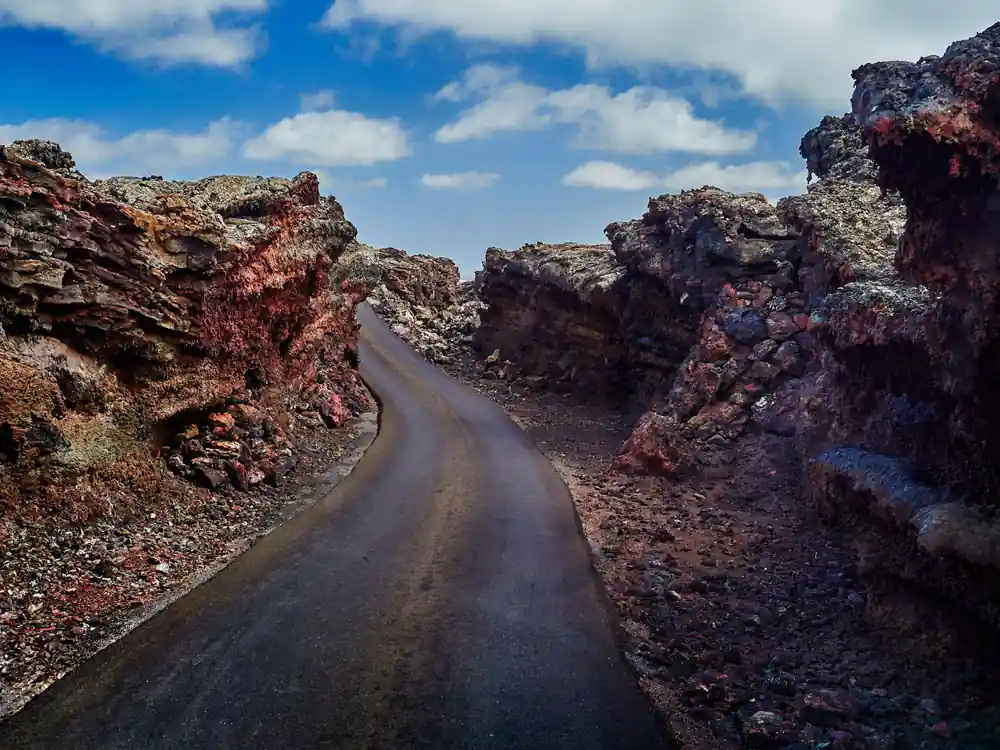
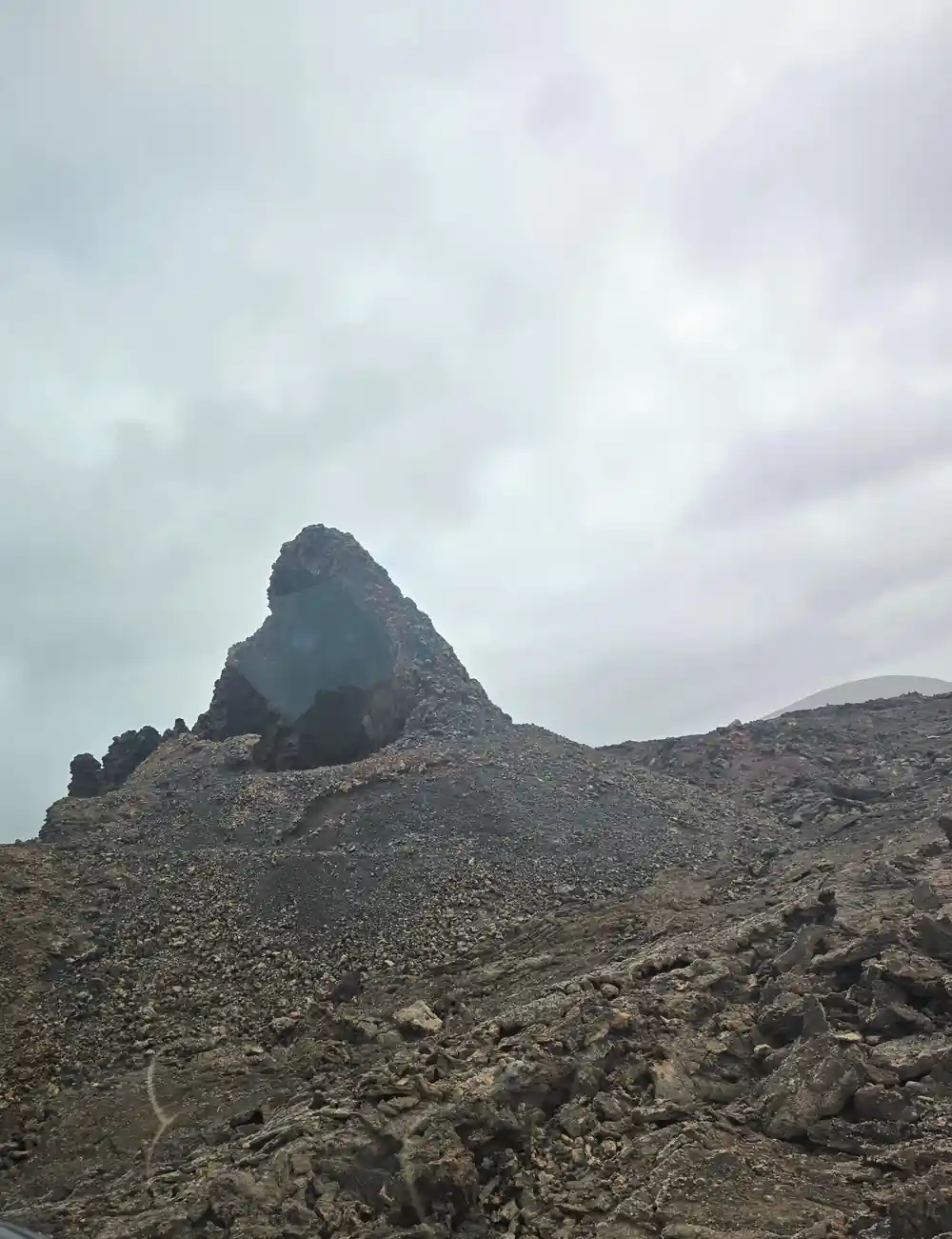
- Timanfaya covers about 51 square kilometers of protected volcanic ground.[3] The full-day tour links the park with both cave sites in one 9-hour day.[1]
- Top choice Timanfaya, Jameos & Cueva from US$102 Duration9 hours[1]CavesCueva de los Verdes + Jameos del Agua[1]Rating4.47 from 2,662 reviews[1]PickupPickup included[1] Check availability
- Timanfaya & caves + lunch from US$109 Duration9 hours[4]CavesCaves plus Timanfaya[4]Rating4.52 from 531 reviews[4]PickupPickup included[4] See this tour
- Timanfaya Park tour from US$68 Duration6 hours[5]CavesTimanfaya National Park[5]Rating4.40 from 885 reviews[5]PickupPickup included[5] See this tour
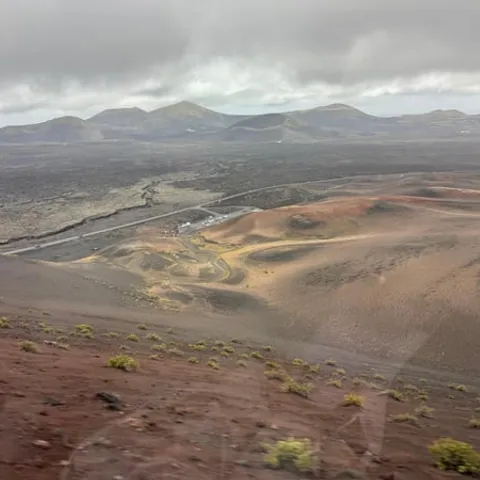
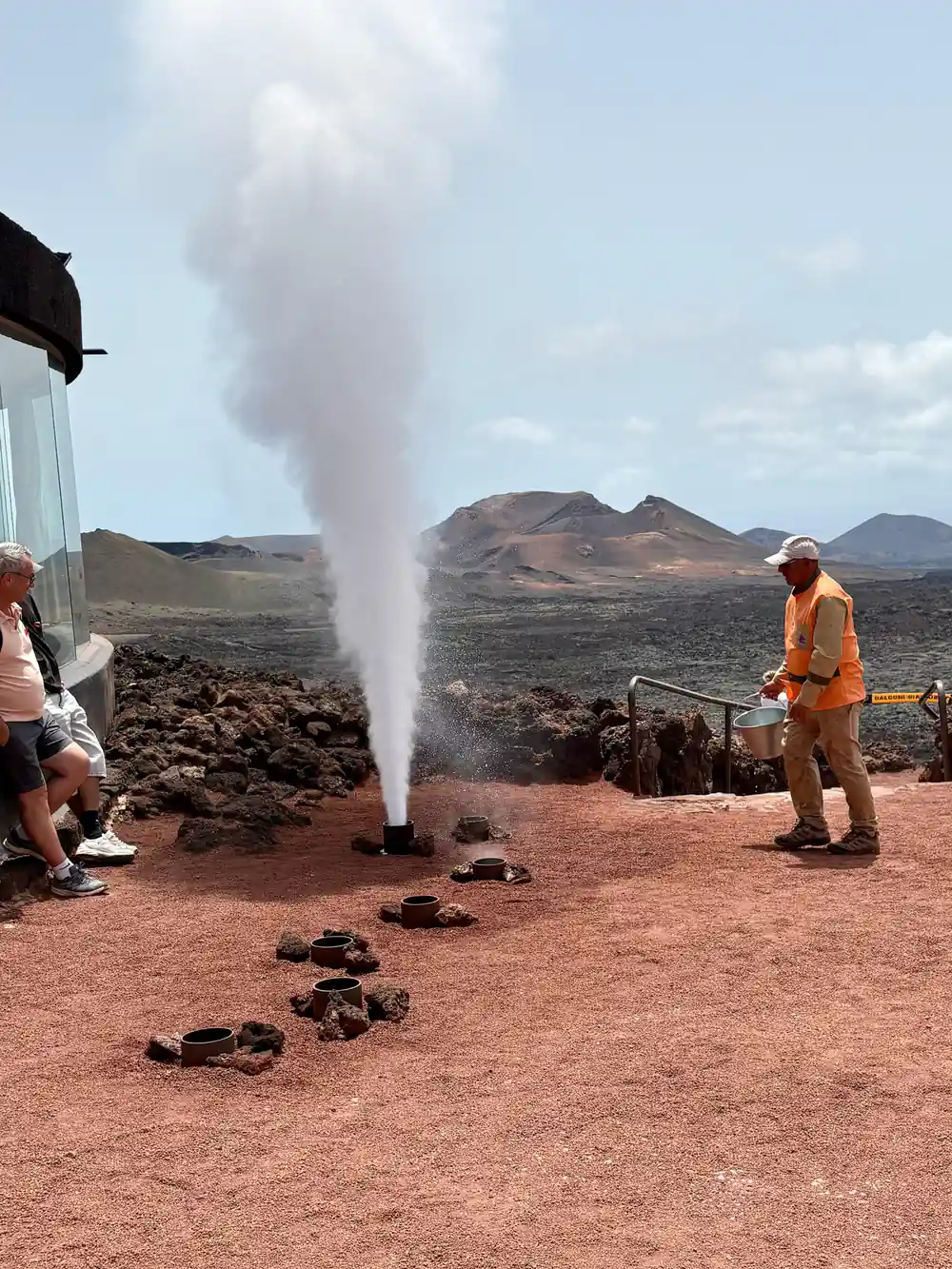
Tickets for independent entry (without a guided tour) can only be purchased online (they are not available at the ticket office) and for a specific time slot on the official website of the Lanzarote Centres for Art, Culture and Tourism (CACT).
Verdict: make the lava tunnels part of your Lanzarote trip
Things to check
A tunnel born from fire
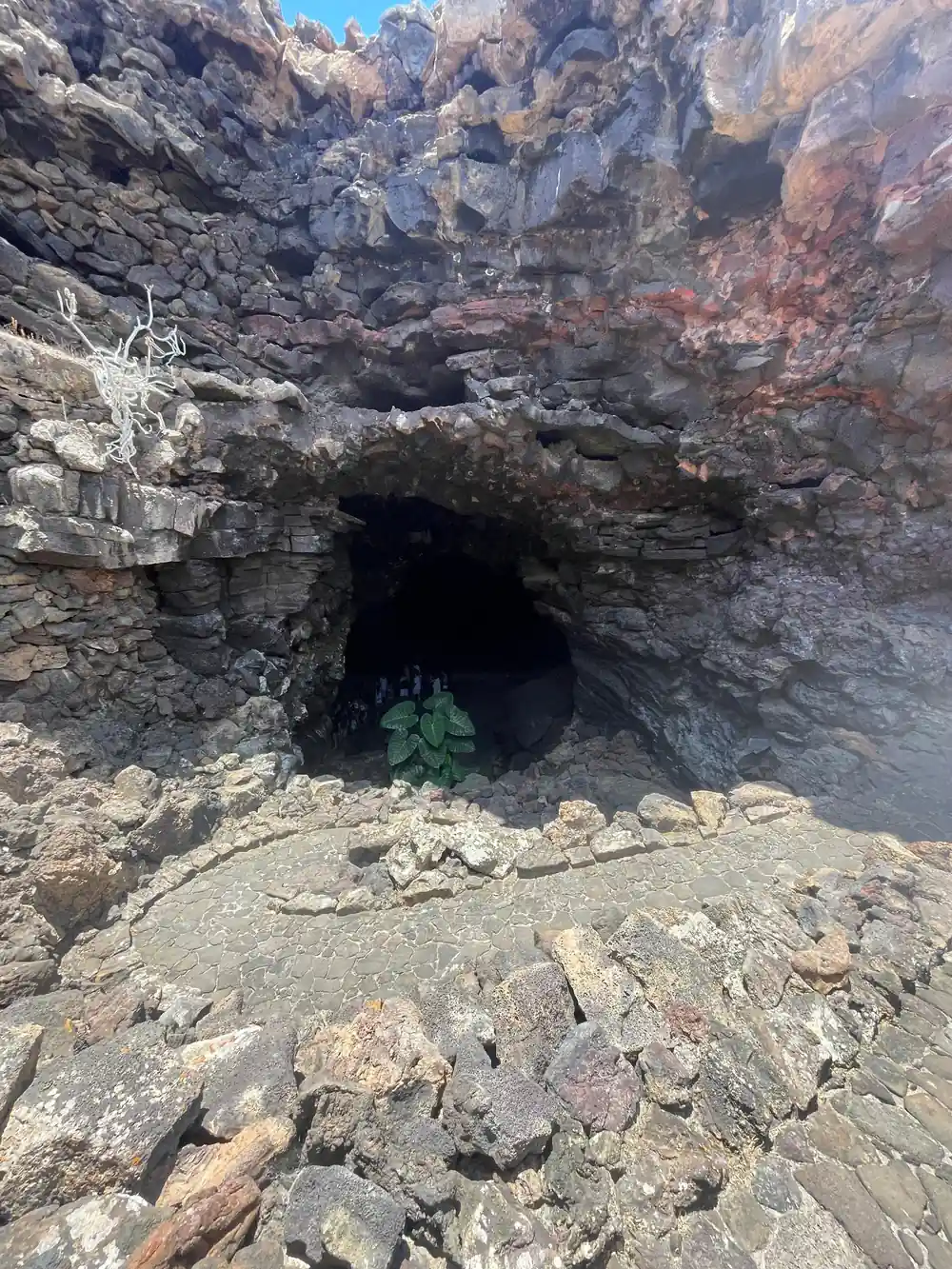
Most of Lanzarote's surface is the work of eruptions, and the north of the island hides one of the strangest results. A river of lava cooled and stiffened on top while it was still moving underneath. When the supply of molten rock stopped, the river drained away and left a long, empty tube behind. Roof collapses opened parts of the tunnel to the sky, and those openings are where people first came in.
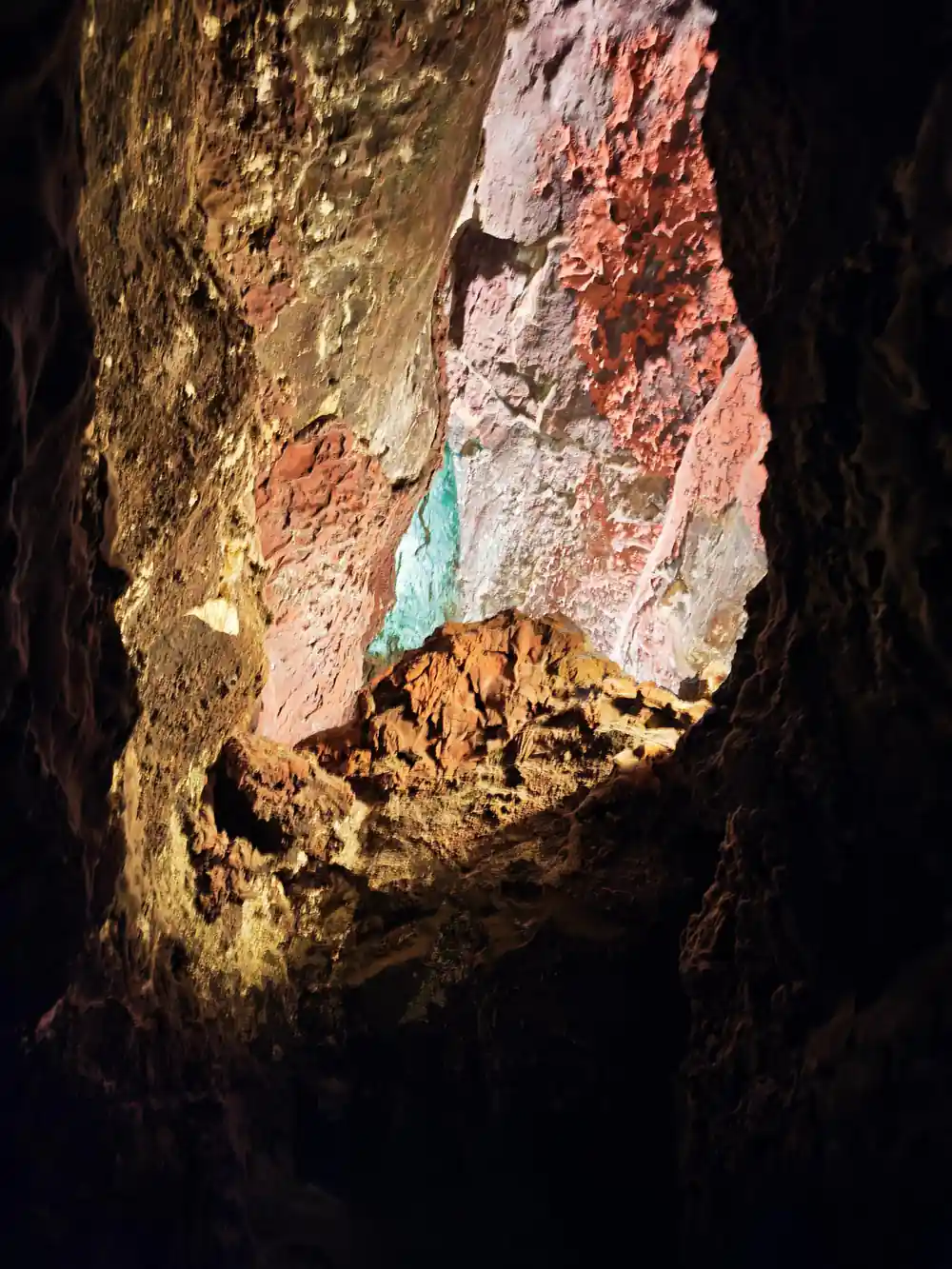
Walking through Cueva de los Verdes feels like stepping inside a piece of plumbing built by the earth. The walls are smooth in places and broken in others, the floor rises and dips, and the colour shifts from grey to ochre as the light changes. Guides point out the layers in the rock, the places where the roof came down, and the narrow passages squeezed between old lava levels. Bring a layer: the tunnel keeps its own still, cool air whatever the coast is doing outside.
Island refuge: when pirates ruled the seas
For a long stretch of its history, Lanzarote's coastline was a target. Ships from North Africa and Europe raided the island for supplies and for people, and the lava tunnels of the north made ready hiding places. Families moved into the upper galleries with animals, grain and water and waited out the danger in the dark. Cueva de los Verdes is said to take its name from the Verde family, who used the tunnel, and the memory of those raids is still part of how islanders talk about it.
The practical side of that history is easy to see once you are inside. The entrance is tight, the passage behind it opens into tall galleries, and it is obvious why a place like this would feel safe. On a guided walk you move in a small group, lighting picks out the rock as you go, and the guide explains which parts of the tunnel were lived in and which were too low or too wet. Voices carry a long way, so groups tend to fall quiet without being asked.
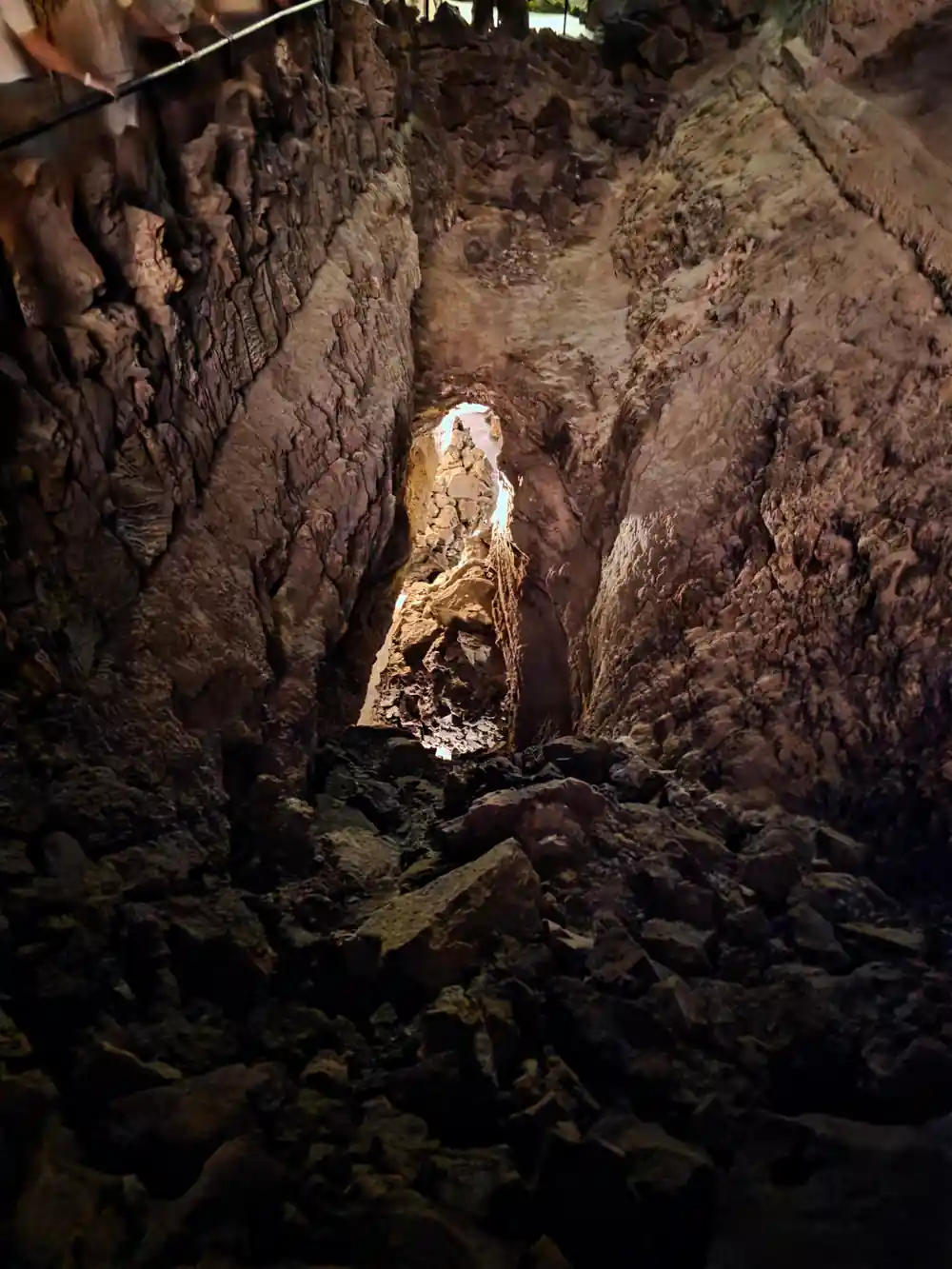
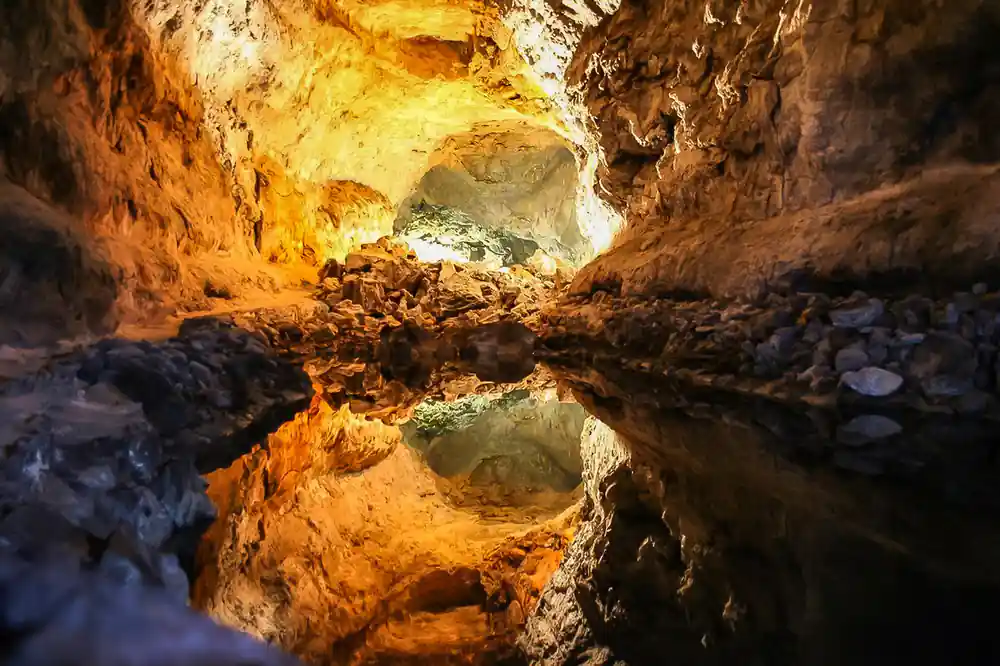
Still water and golden walls inside the lava tube at Jameos del Agua.
The blind albino crabs of the underground lake
The lake inside Jameos del Agua is home to small, blind, pale crabs. They live in the dark water and on the rock beneath it, feeling their way rather than seeing, and they have become the emblem of the place. Look over the low wall where the path passes the water and give your eyes a moment to adjust. The crabs are tiny, and they show up as pale specks moving slowly across the bottom.
Their world is a strange one: no daylight, very little food, and water that moves with the sea outside. Guides usually stop here, because the crabs raise the same questions every time, about how anything lives in a place like this and how it got there in the first place. Keep your camera steady, brace your arms on the railing, and take the moment while you have it.
If you are travelling with children, this stretch tends to be the part they remember, since the crabs are easy to spot once someone points them out. Ask where to stand for the clearest view over the water, and watch how the reflections break up as people move along the path above the lake.
Cesar Manrique's Jameos del Agua: art meets lava
César Manrique was a Lanzarote-born artist who spent his career arguing that art belongs inside the landscape rather than on top of it. At Jameos del Agua he turned a collapsed section of the lava tunnel into a place that people visit for its own sake: white walls, palms and cactus planted where the roof fell in, a pool of green water, and a bar set into the rock. Nothing shouts, and every view is framed by the shape of the tunnel itself.
The result works differently from a plain cave visit, because you are not only looking at geology. You are walking through a designed space where the rock, the planting and the water belong to one idea. Footsteps echo, light comes in from openings above, and the air barely changes from one room to the next. It is worth slowing down, since the details are small: the curve of a wall, the way a plant leans towards an opening, the colour of the water against dark stone.
Photographs come out best near the water, where the surface doubles whatever is above it, and in the planted courtyard where pale walls bounce light towards the tunnel mouth. Take your time on the pathways, because groups move through the space in both directions. A short stop at the bar, looking out over the pool, is one of the small pleasures of the visit.
from US$102
Nine hours, with Timanfaya National Park, Cueva de los Verdes and Jameos del Agua among the stops, and 61 pickup location options.[1]
The underground concert hall
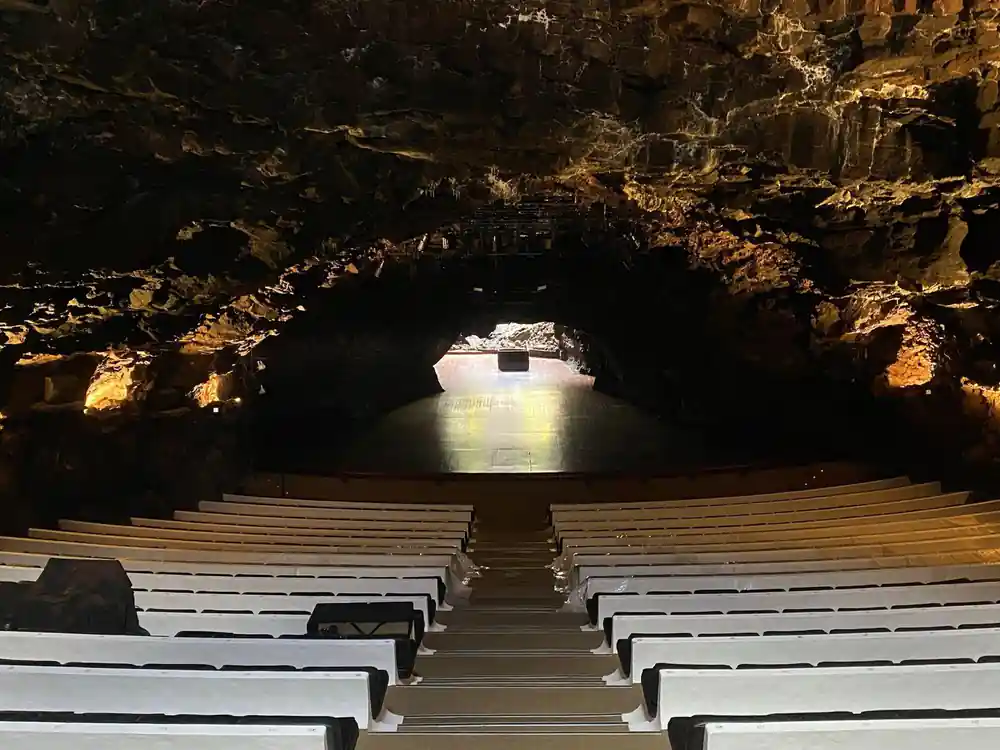
Inside the tunnel there is a chamber used for music and performance. The audience sits where the rock opens out, and the shape of the cavity does the work that a concert hall ceiling normally does. The sound stays close and clear, and the space is used for small concerts and events as well as for visits. If you would rather hear the room in use than see it empty, look at what is on during your stay.
Even without a performance, the chamber deserves a slow look. The walls curve inward, and the seating follows the rock instead of cutting across it. Listen for a second when the group stops talking and the room gives very little back, which is part of what makes a hall down here feel so different from one above ground.
The volcanic lake and its peculiarities
The water at Jameos del Agua is not a pond left over from the eruptions. It is the sea, arriving through the tunnel system, and its level rises and falls with the tide outside. That connection gives the lake its colour, a green that shifts with the light, and its calm surface, which is usually broken only by a breeze from the openings above.
Look closely and the lake is busier than it first seems. There is a rim of white salt on the rocks, the water is clear enough to see the bottom in places, and the crabs go about their business regardless of who is watching. The same water also explains why the air inside feels different from the air outside, fresher and slightly damp. It is a good spot to stand still for a minute before the walk continues.
The lake is also a reminder of how connected the island is beneath the surface. Lava tubes, cracks and sea water share the same hidden routes, and the calm pool in front of you is one small window onto them. Take a look at the rock line just above the water, where the tide has left its mark on the stone.
The optical illusion at journey's end
The last stretch of the walk is where the tunnel plays its quietest trick. The pool at the end is so still that it stops reading as water and starts reading as a second ceiling, with the wall above it apparently continuing below the surface. Stand at the railing and wait for the surface to settle, and the room looks deeper than it is.
It is a good note to end on, and a reminder that these caves were shaped by forces that had nothing to do with people. The same tunnel that sheltered families from raiders now holds gardens, a stage and a lake full of pale crabs. Step back out into the sun, and the contrast does the rest of the work.
From-prices for tours that reach the caves
US dollar from-prices per person on these GetYourGuide listings:[1],[8],[9].
What a cave day costs from
US dollar from-prices per person on these GetYourGuide listings:[1],[8],[9].
When to book your cave day
How to plan your cave day
Pick your cave day
The tour booked from this site runs 9 hours and covers both caves plus Timanfaya National Park.[1]
Choose pickup or drive
Pickup is included, with 61 pickup location options; check availability for details.[1]
Fix your park slot
Independent entry to Montañas del Fuego is online only and for a specific time slot.[2]
Book with flexibility
Free cancellation applies up to 24 hours in advance on the tour booked from this site.[1]
Pack for the tunnel
Closed shoes with grip and a light jacket work well; tunnel air stays cool while the coast is warm.
See the lava tunnels and the fire mountains in one day
from US$109