If you read nothing else
- César Manrique grew up on Lanzarote and spent his life turning its lava, light and coastline into places people can walk into.
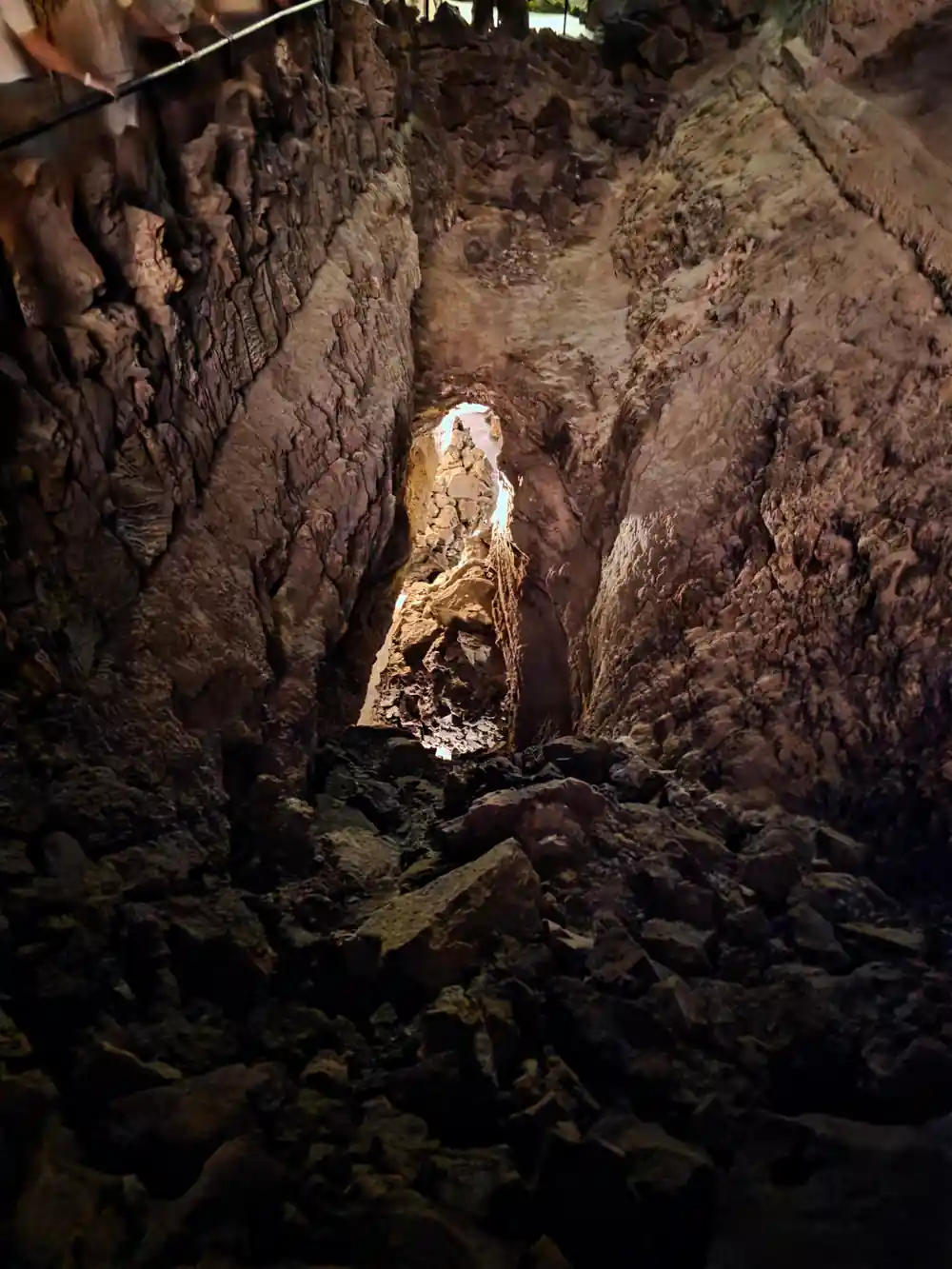
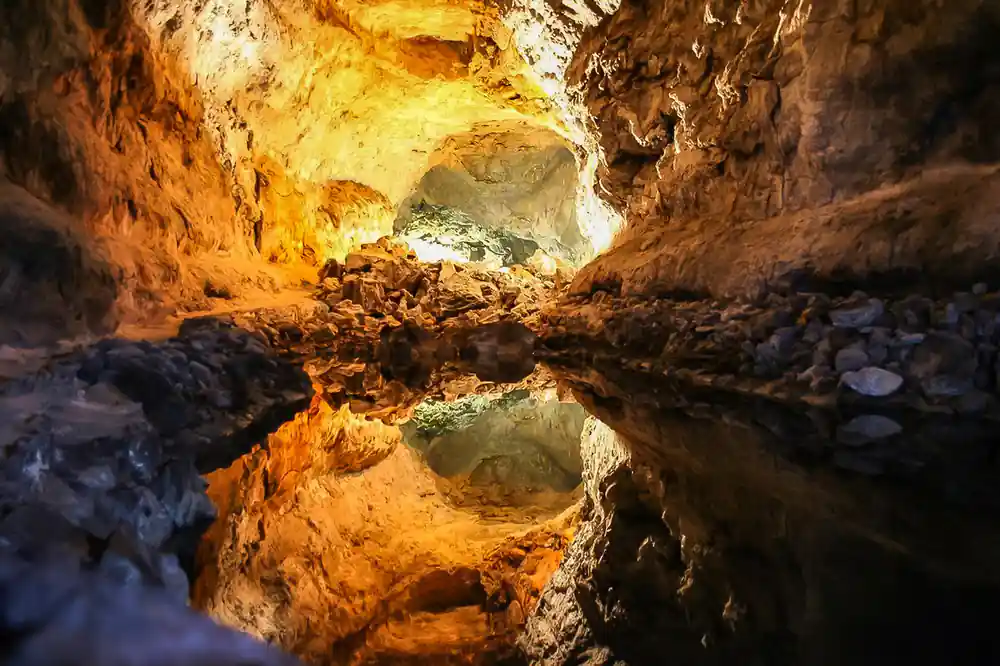
- A collapsed lava tube with a pool at the bottom and a small auditorium in the rock, one of the stops on the tour booked from this site.[1]
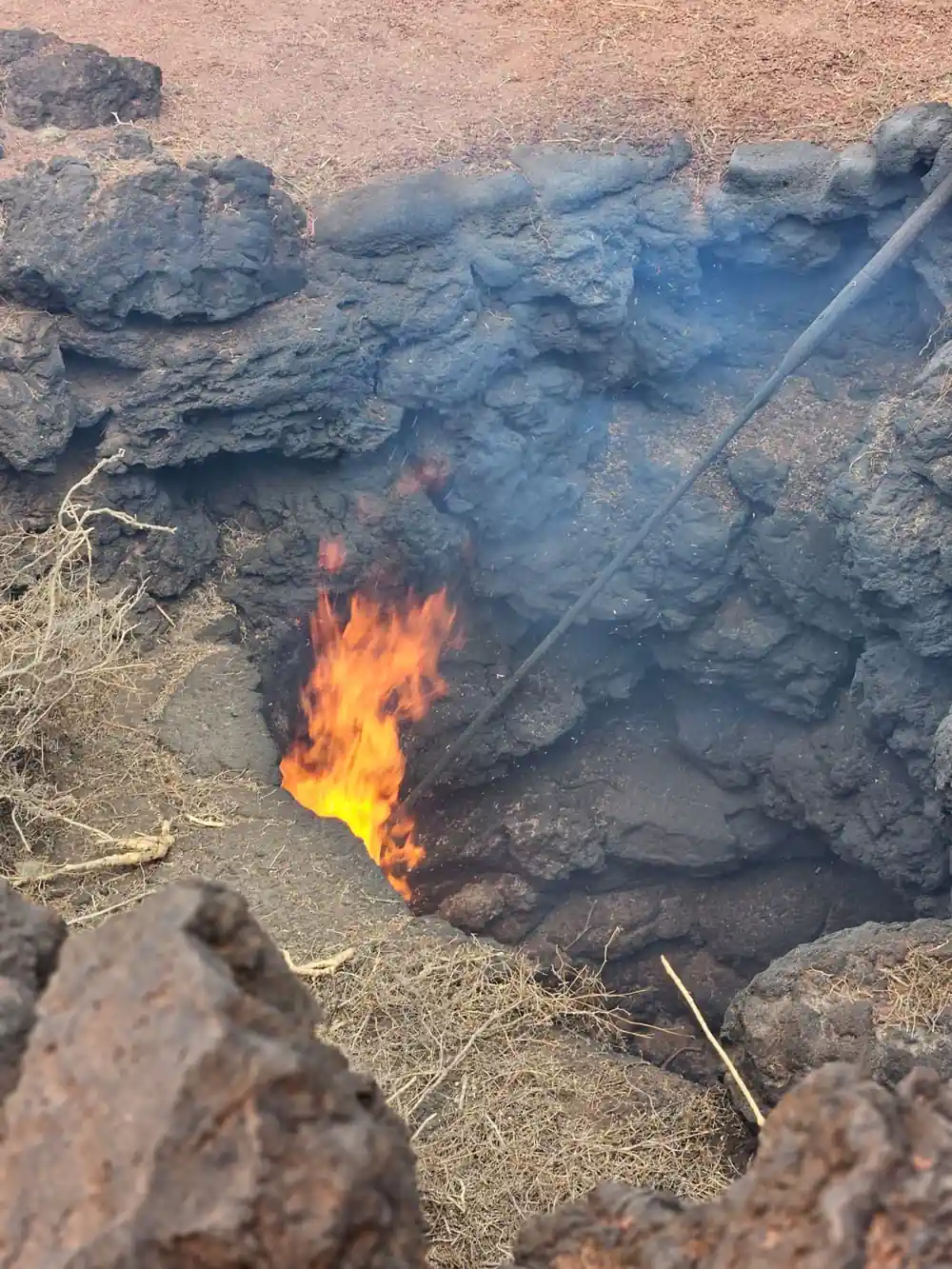
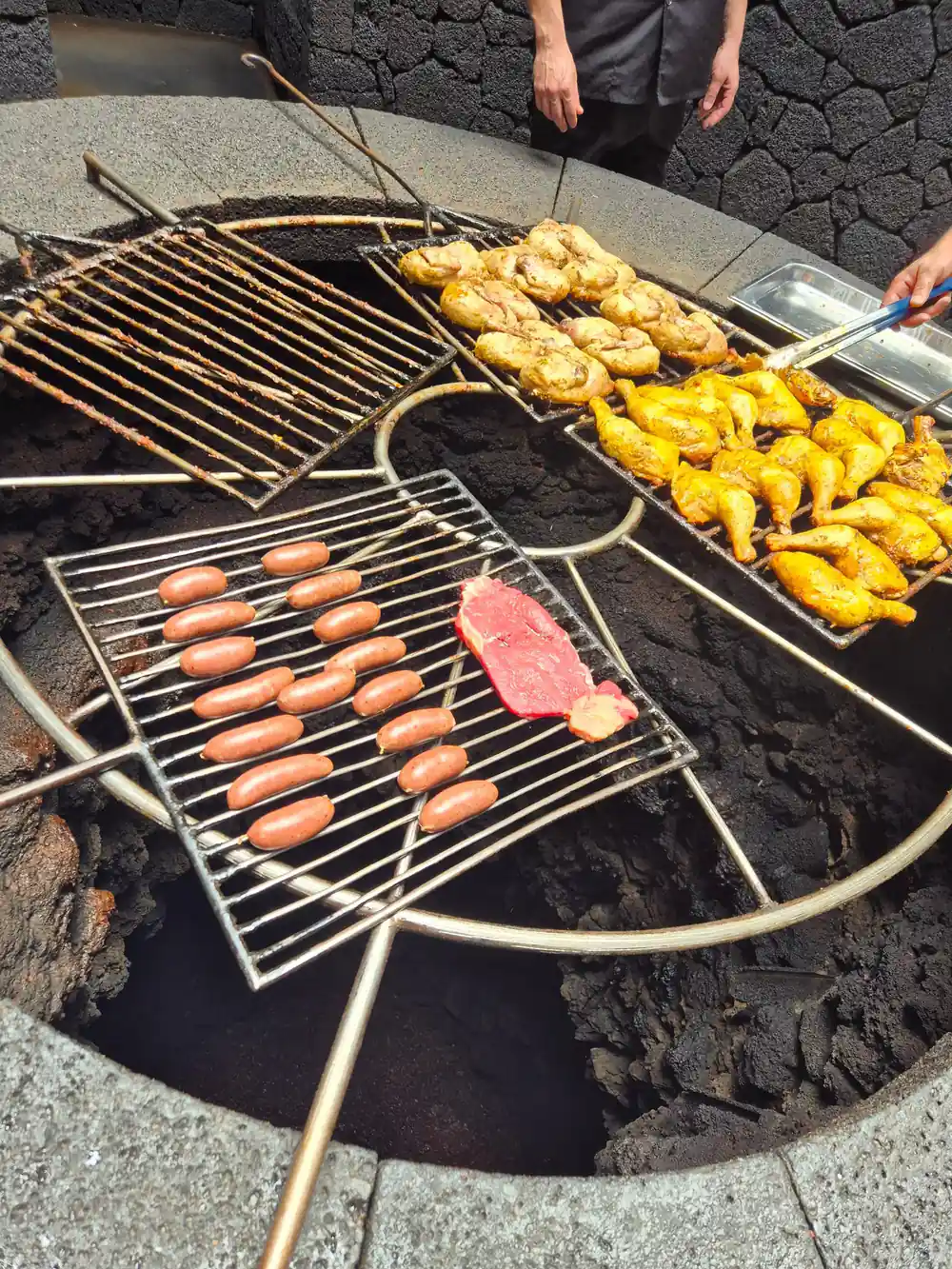
- The park restaurant cooks with heat from the subsoil, where temperatures exceed 600 °C just 15 meters below the surface, without fire or electricity.[2]
- Independent entry to Montañas del Fuego is sold online only, for a specific time slot, with a standard adult ticket from €30.00.[3][4]
- Timanfaya Park, Jameos Agua and Cueva Verdes in 9 hours, from US$102, with pickup included and the ticket line skipped.[1]
- Top choice Timanfaya, Jameos & Caves from US$102 Duration9 hours[1]Rating4.47 from 2,662 reviews[1]Guide languagesEnglish, French, German, Spanish[1]CancellationFree cancellation up to 24 hours in advance[1] Check availability
- Volcanoes and Caves Tour from US$109 Duration9 hours[5]Rating4.52 from 531 reviews[5]Guide languagesSpanish, English, French, German[5]CancellationFree cancellation up to 24 hours in advance[5] See this tour
- Timanfaya Park Tour from US$68 Duration6 hours[6]Rating4.40 from 885 reviews[6]Guide languagesEnglish, Spanish[6]CancellationFree cancellation up to 24 hours in advance[6] See this tour
Located in a stone structure near the dining area, it uses natural heat from the subsoil, where temperatures exceed 600 °C just 15 meters below the surface. Thanks to this energy source, meat and vegetables are cooked without fire or electricity, directly on a grill placed over an open cavity in the rock .
Manrique, the lava caves and the volcano in one day
Things to check
- Independent entry to Montañas del Fuego is online only, for a specific time slot[3]
- Standard adult ticket to Montañas del Fuego from €30.00[4]
- The Mancha Blanca visitor centre gives free access to its exhibition and audiovisual programme[7]
- Visitor centre opening hours: Monday to Sunday, 9:00 to 16:00[8]
On the day
The Artist Who Reimagined an Island
Lanzarote hands you its strangeness all at once: fields of black clinker, cones with smooth sides, and a sea that keeps breaking along the edge of them. César Manrique grew up here, left the island to study and paint, and came home convinced that the landscape itself was the artwork. He treated lava not as ground to be flattened and built over but as material to sink into, cut open and frame. That instinct is why so much of what you visit today feels carved rather than constructed, and why the island's buildings keep low and quiet against the rock.
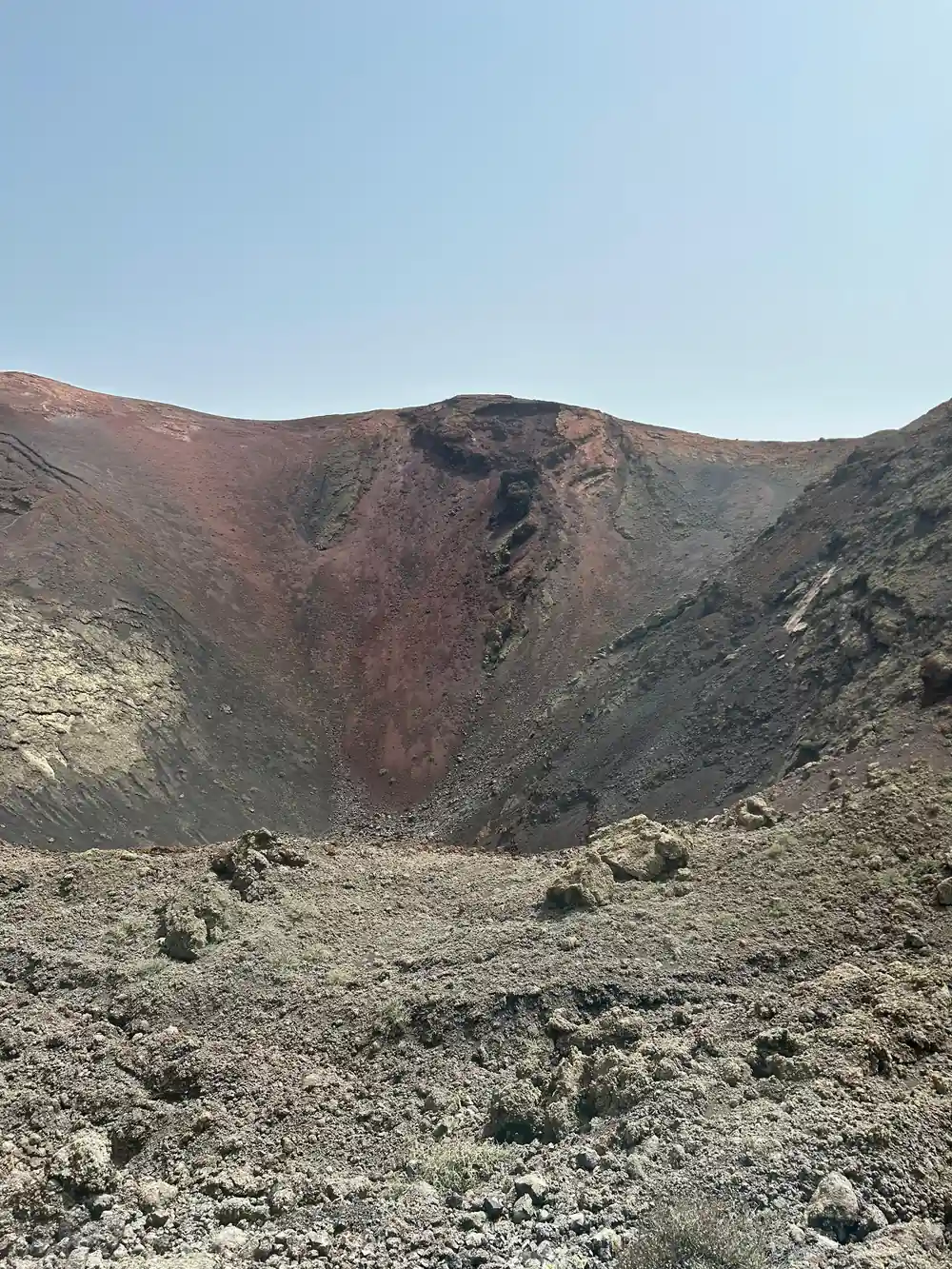
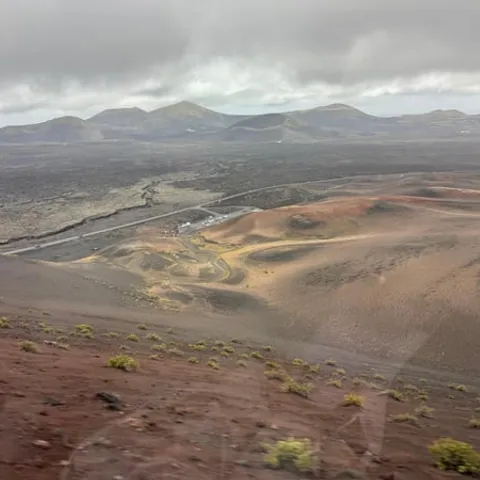
Timanfaya is the centre of that story. The park was declared a National Park by a decree of August 9, 1974, published in the Official State Gazette on September 17, 1974,[11] and it covers about 51 square kilometers (20 square miles).[12] Manrique did not design the park, but he shaped how the island presents it, and the same language of stone, whitewash and metal runs through the viewpoints, signs and buildings you pass on the way south. Knowing a little about him changes what you notice: the way a wall is finished, the way a doorway frames a view, the way a piece of metal is allowed to stand on bare rock.
Jameos del Agua: A Lava Bubble Becomes a Concert Hall
A lava tube is a tunnel left behind when the outside of a flow cools and sets while the molten centre keeps running. Where part of the roof of one of these tubes collapsed, it left a bright open bowl in the middle of dark rock, with the sea close by. Manrique built into that accident: a bar tucked under the overhang, a pool at the bottom of the shaft, an auditorium where the cave opens out, and stairs that carry you from sunlight into shadow and back again. You hear the water before you see it, and the colour of the rock changes with every few steps.
The tour booked from this site stops at Timanfaya National Park, Cueva de los Verdes and Jameos del Agua, with 61 pickup location options and 61 drop-off locations.[1] It runs for 9 hours, skips the ticket line and includes pickup, and you can check availability for details.[1] If you would rather not drive and park, this is the straightforward way to see the Manrique sites and the volcano in a single day.
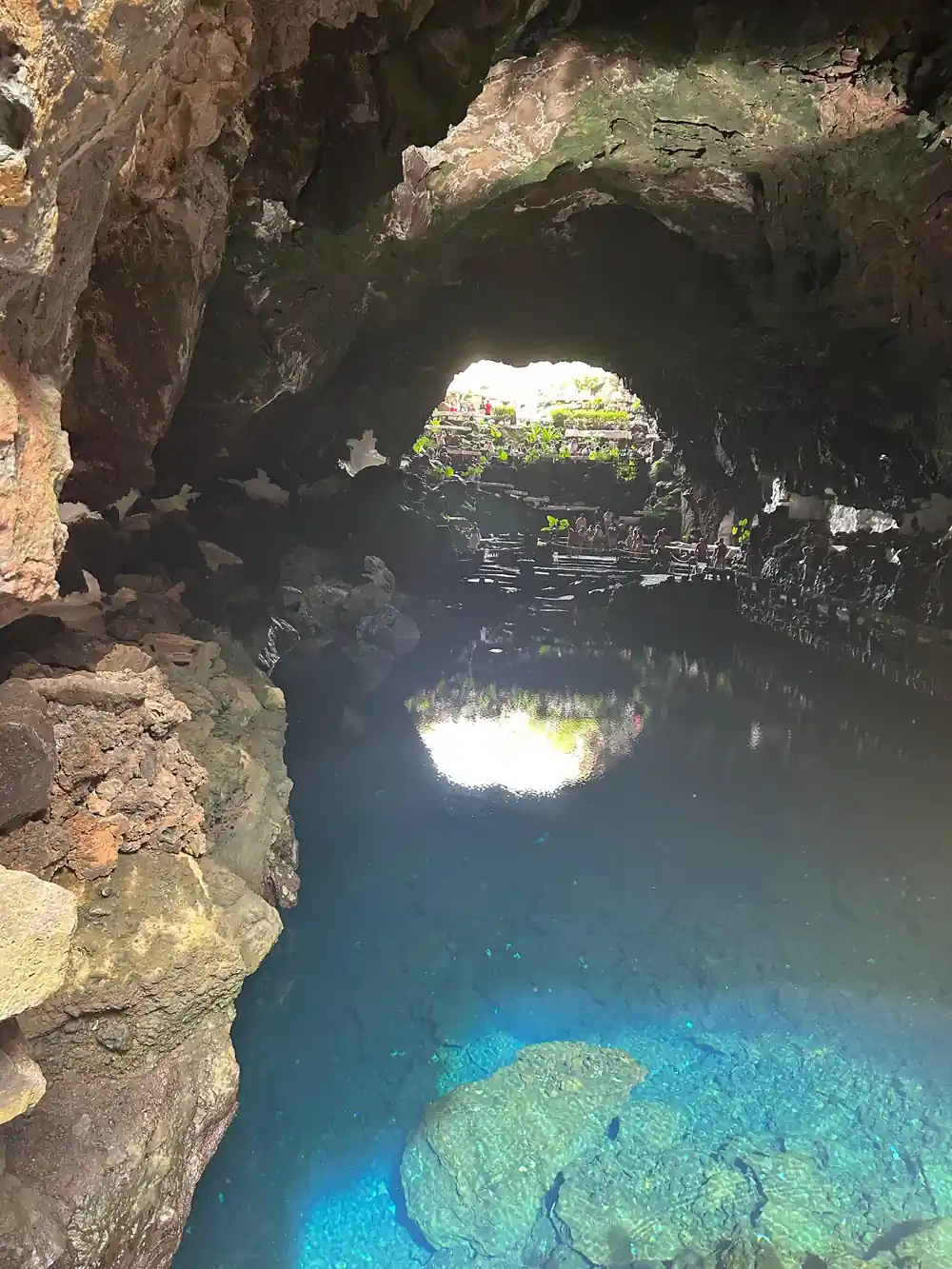
Manrique framed lava, light and water at Jameos del Agua.
Cueva de los Verdes: Light and Shadow in Stone
Cueva de los Verdes belongs to the same long tube system, a corridor of rough stone that narrows and opens again as you follow it. The visit is as much about light as it is about rock. Guides work with small lamps and hidden openings, so a chamber that looked like a dead end turns out to have a roof, and a wall turns out to have a face in it. There is a surprise near the end that most people do not see coming, and the cool air down there is a relief after a bright afternoon on the surface.
Two other tours pair the cave with the park. The Timanfaya and Cueva de los Verdes day trip from US$100 runs for 9 hours and skips the line through a separate entrance,[13] while the full day Timanfaya Park and Jameos del Agua tour from US$86 runs for 9 - 10 hours and skips the ticket line.[14] Both include pickup, with check availability for details.[13][14]
The White Walls With Green and Blue Trim
Drive through any Lanzarote village and the same palette comes back at you: white walls, green or blue trim, flat roofs, wooden doors and shutters, and almost nothing shouting for attention. Manrique pushed hard for that look, and for the idea that a building should sit inside a landscape rather than dominate it. The colour scheme is not decoration for its own sake. Against black lava and dry brown earth, a white wall with a green edge reads from a long way off, and a blue door picks up the sea.
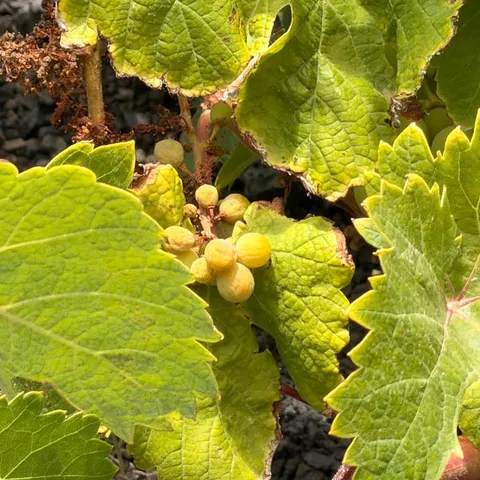
You can see the same thinking in the small things: a sign cut from stone, a doorway with a curved top, a wall that steps with the slope instead of fighting it. If you are driving yourself, this is the part of the island you get for free between the big stops. Tours such as the 4x4 tour to Famara, Teguise and Timanfaya, from US$79, run through the northern villages,[15] and the Timanfaya National Park and La Geria tour, from US$73, crosses the wine country around the volcano.[16]
from US$102
A full day that takes in Timanfaya National Park, Cueva de los Verdes and Jameos del Agua, with pickup included and the ticket line skipped.[1]
Timanfaya National Park: Harnessing the Volcano
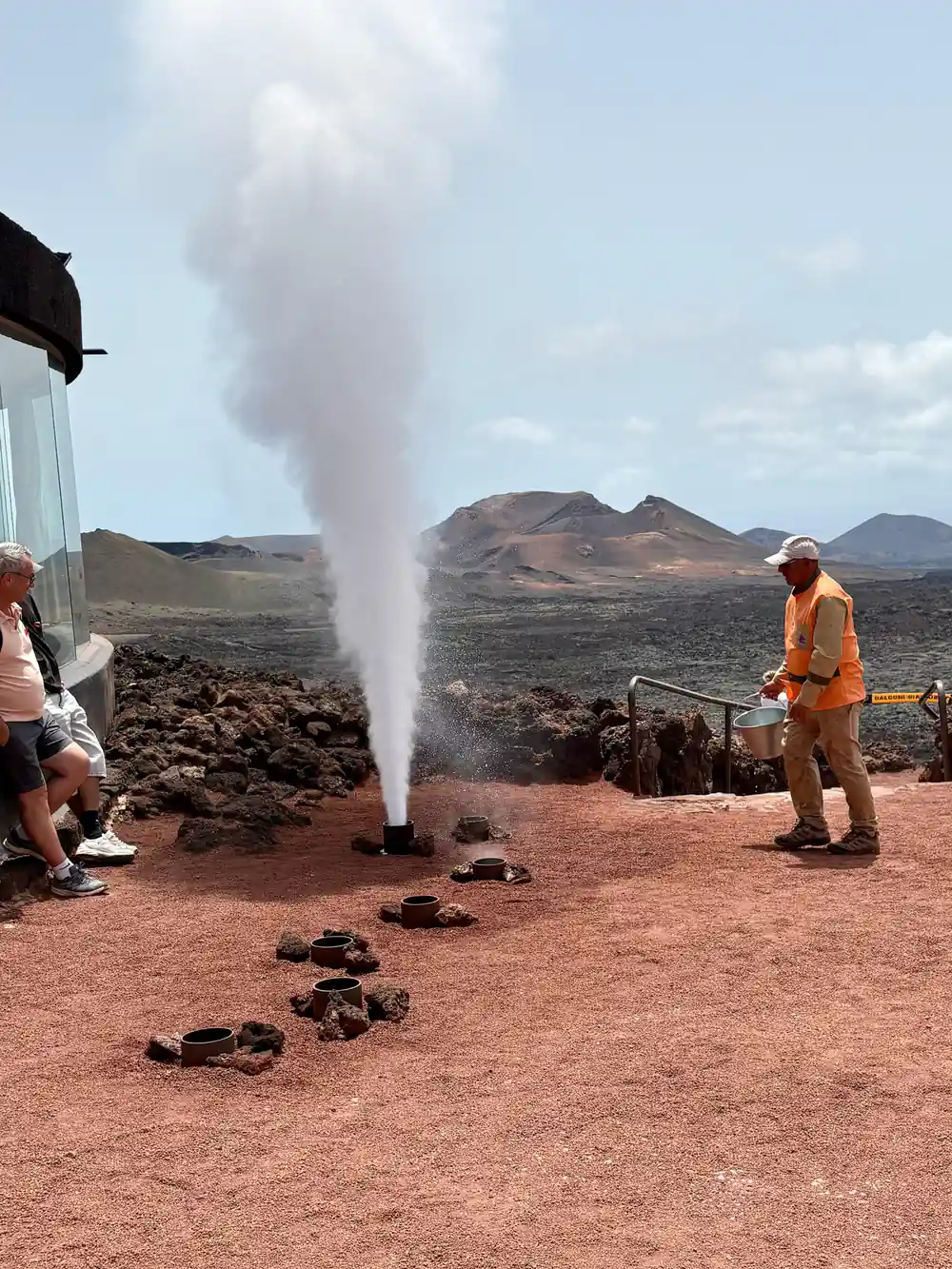
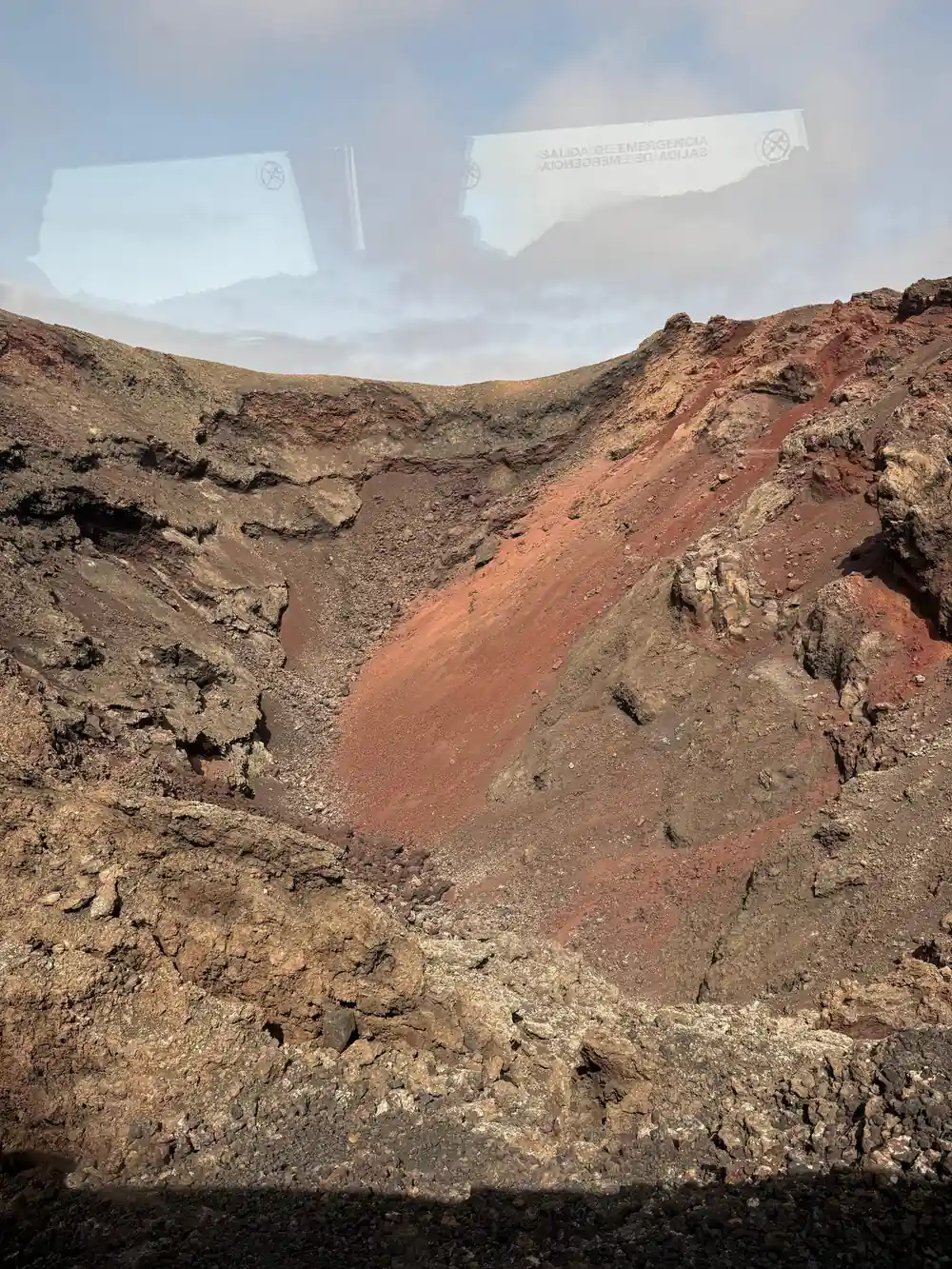
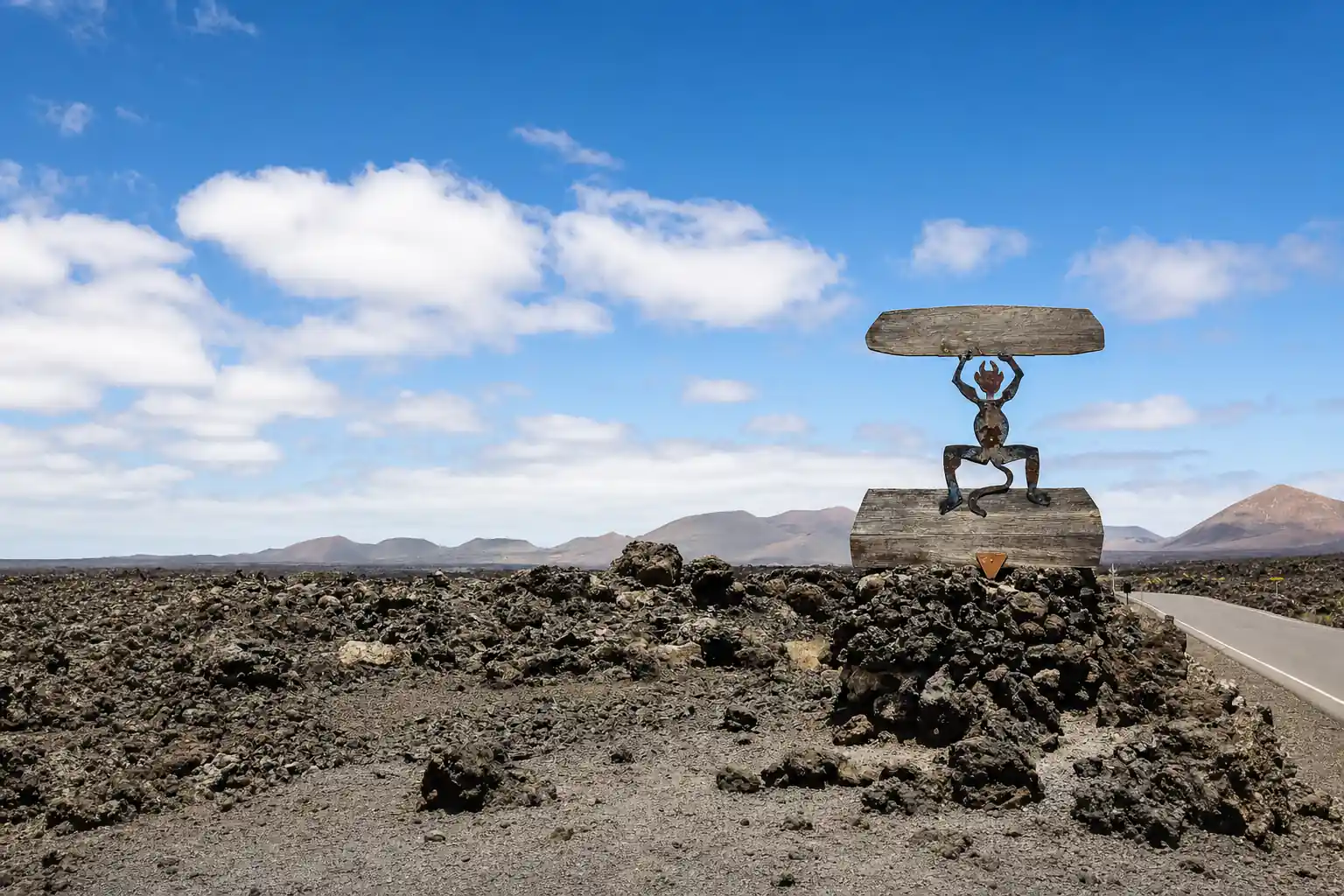
At Islote de Hilario the ground under your feet is hot. On the surface, temperatures reach around 250 ºC, and they can even reach more than 600 ºC at 13 m deep.[9] The park restaurant, El Diablo, puts that heat to work: its volcanic oven draws natural heat from the subsoil, where temperatures exceed 600 °C just 15 meters below the surface, and meat and vegetables are cooked without fire or electricity on a grill set over an open cavity in the rock.[2] The Timanfaya National Park devil that gives the restaurant its name waits at the entrance, a small red figure with a fork, standing out against the grey stone.
The Route of the Volcanoes, the coach loop that carries visitors through the ash fields, has adapted coaches.[10] At the camel station, the ride lasts approximately 20 minutes.[17] Several films inspired by other planets have been filmed here, including Enemy Mine, Krull, Mission Stardust, Stranded and Operation Ganymed.[18] If you come independently, remember that tickets for independent entry to Montañas del Fuego can only be purchased online and for a specific time slot.[3]
The Ban on High-Rise Development
Manrique's loudest argument was with height. He campaigned against tall hotel blocks on an island where a two or three storey building already looks enormous, and the result is a coastline that photographs like a village rather than a resort strip. There are no towers to block the view from the road, and in most places you can stand on the beach and see the whole ridge behind it. Whether you come for the volcano or for the sea, that decision shapes what your holiday looks like from the first afternoon.
The low-rise approach also keeps the roads between the villages quiet and the views long, so driving south toward the park feels unhurried. It was a deliberate choice rather than an accident, and it is worth knowing before you book somewhere to stay: the place you sleep will be a low white building with the volcano somewhere behind it. Manrique's argument was simple, that a view belongs to everybody who walks past it, and the island still mostly acts as if he won.
His Legacy and Your Experience Today
Start with the practical details. Independent entry tickets for Montañas del Fuego can only be bought online and for a specific time slot,[3] and the standard adult entrance ticket is 30.00 EUR.[4] Before you drive up, the visitor centre in Mancha Blanca gives free access to its exhibition and audiovisual programme,[7] and it is open Monday to Sunday from 9:00 to 16:00.[8] If you want a guide, the Termesana Route brings visitors close to the volcano and to the culture of Lanzarote's inhabitants during the 1730-1736 eruptive period.[19]
Getting there is straightforward. Puerto del Carmen sits about 22 km from Timanfaya National Park directly, with a road distance of about 23.5 km,[20] and Line 60 passes through Yaiza on its route between Arrecife and Playa Blanca.[21] Many travellers simply take the full day tour instead: the Timanfaya Park, Jameos Agua and Cueva Verdes tour lasts 9 hours, includes pickup and skips the ticket line, from US$102.[1]
Montañas del Fuego ticket prices
Standard entrance prices for Montañas del Fuego (Timanfaya), in euros, from CACT Lanzarote.[4]
What a Timanfaya day costs
All amounts are GetYourGuide from-prices per person in US dollars.[1][5][6][22]
When to book your day in the lava
Planning your day
Choose guided or independent
Independent entry to Montañas del Fuego is online only, for a specific time slot, while tours include pickup and skip the ticket line.[1][3]
Book before you fly
Reserve now and pay later is available on the tour booked from this site, and free cancellation runs up to 24 hours in advance.[1]
Start at Mancha Blanca
The visitor centre gives free access to its exhibition and audiovisual programme and opens Monday to Sunday from 9:00 to 16:00.[7][8]
Add the caves to the volcano
Cueva de los Verdes and Jameos del Agua sit in the same lava tube system as the park's ash fields, and one day covers all three.[1]
Pack for wind and shade
Lanzarote is windy and bright, and a cave stays cool even on a hot day, so bring a light layer, a hat and shoes that grip rough stone.
See the volcano, the caves and Manrique's island in one day
from US$103Reserve now & pay later