If you read nothing else
- Timanfaya National Park is about 51 square kilometers (20 square miles) in size, a protected expanse of lava fields, ash plains and cinder cones.[1]
- The tour adds two lava tubes to the day: Cueva de los Verdes and Jameos del Agua are both listed as stops on the itinerary.[2]
- The tour booked from this site is from US$102, and free cancellation is available up to 24 hours in advance for a full refund.[2]
- At Islote de Hilario the surface reaches around 250 ºC, and at 13 m deep it can reach more than 600 ºC.[3]
- Shoot the ash fields, the dark road through red rock and the visitor centre at Mancha Blanca, open Monday to Sunday from 9:00 to 16:00.[4]
- Top choice Timanfaya Caves Combo Tour from US$102 Duration9 hours[2]Rated4.47 from 2,662 reviews[2]Guide languagesEnglish, French, German, SpanishFree cancellationUp to 24 hours in advance[2] Check availability
- Fire Mountains with Lunch from US$109 Duration9 hours[5]Rated4.52 from 531 reviews[5]Guide languagesSpanish, English, French, GermanFree cancellationUp to 24 hours in advance[5] See this tour
- Timanfaya and Green Lagoon from US$57 Duration2.5 - 5 hours[6]Rated4.58 from 2,154 reviews[6]Guide languagesEnglish, German, SpanishFree cancellationUp to 24 hours in advance[6] See this tour
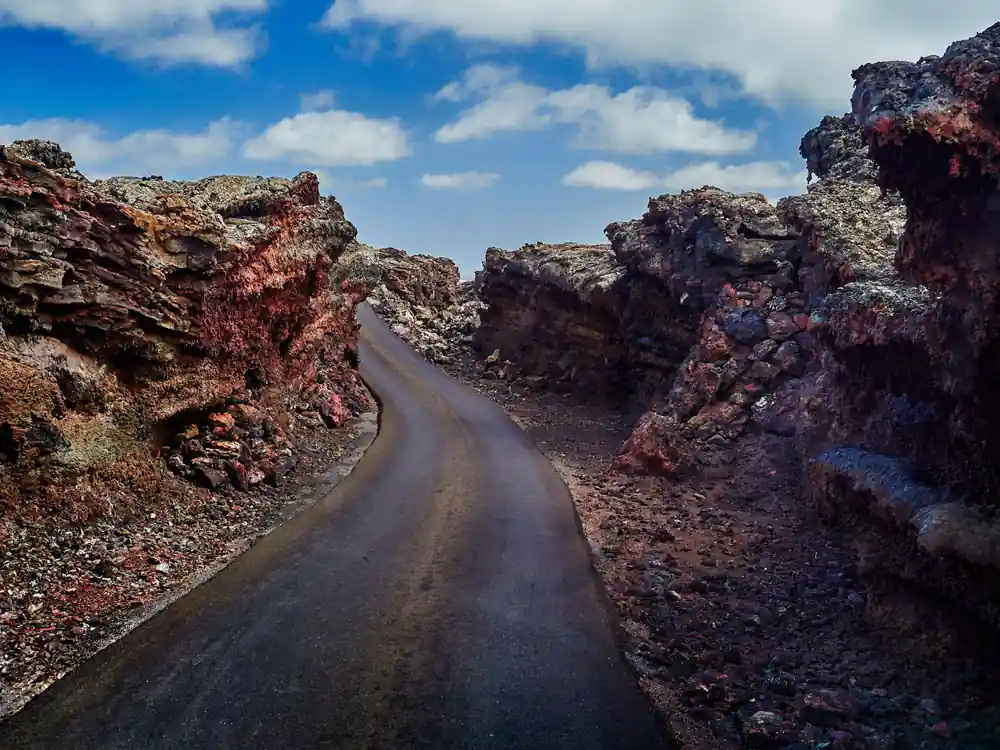
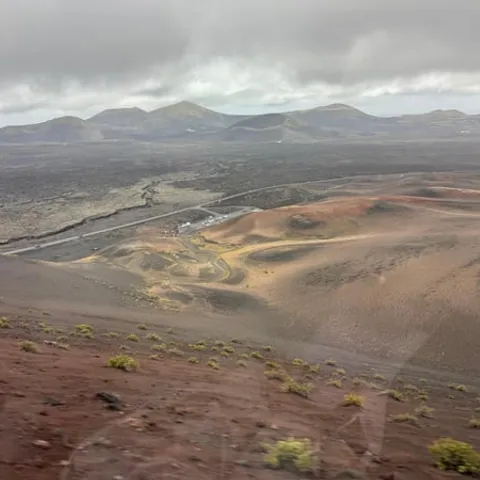
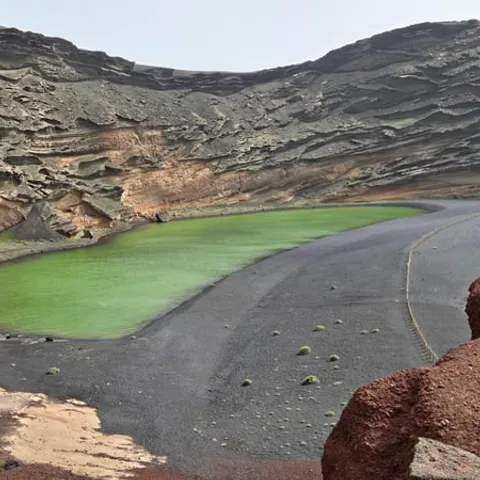
In fact, several films inspired by other planets have been filmed in Timanfaya, such as Enemy Mine, Krull, Mission Stardust, Stranded, Operation Ganymed, etc.
Should you book the three-stop volcanic day?
Prepare for the day
- Book the tour ahead in the season you travel
- Check your pickup point and time the day before
- Bring sun cream, a hat and sunglasses; the ground throws back light
- A light windproof layer helps on the coach and in the caves
Why Lanzarote's Lava Fields Feel Otherworldly
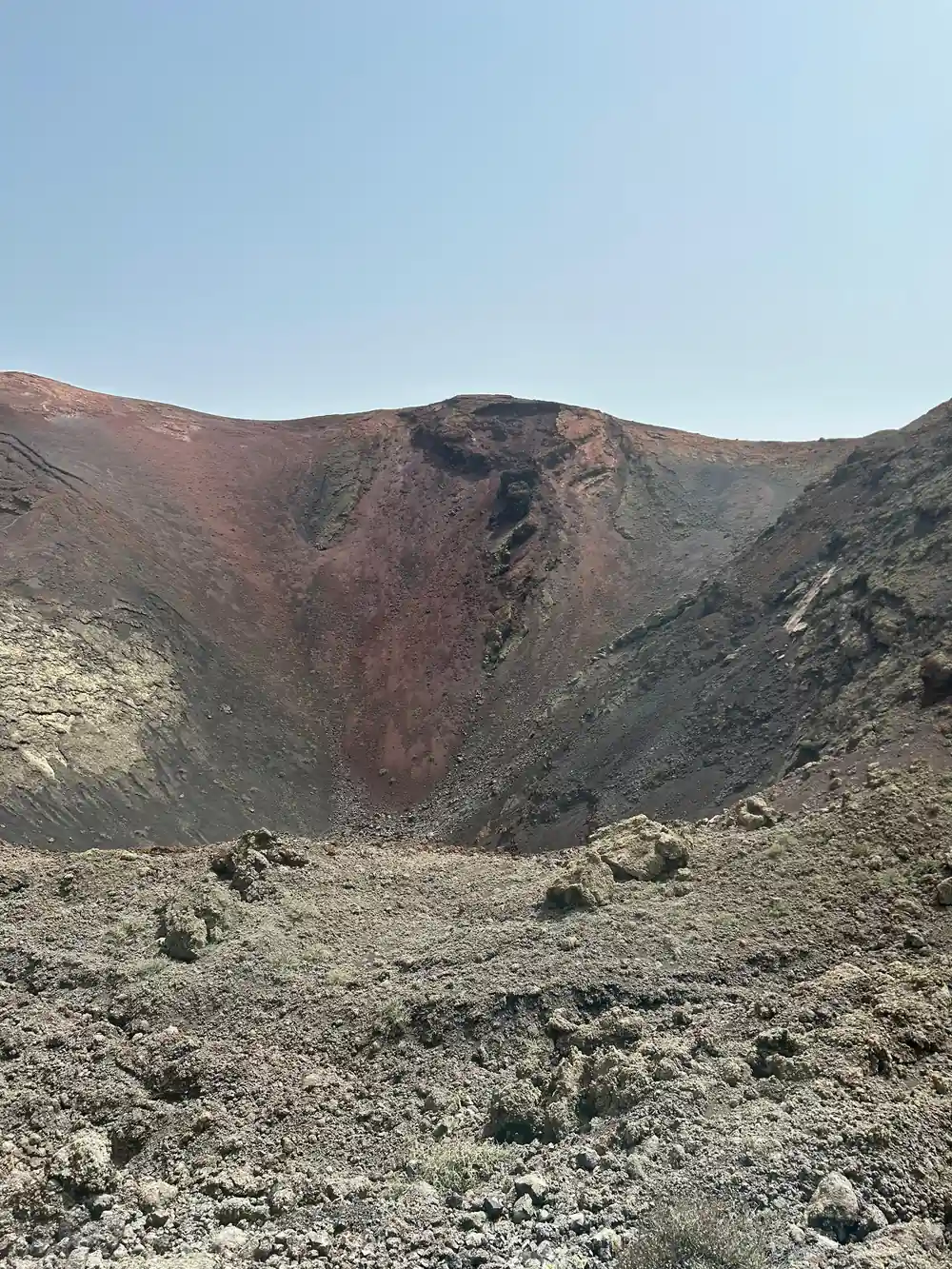
Lanzarote is an island of bare volcanic ground, and the Fire Mountains show it at its plainest. The Montañas del Fuego that give Timanfaya its name are black, rust red and ochre, with almost no soil and very little vegetation. Fields of ash ripple like dunes, cones stand sharp against the sky and long ropes of cooled lava run down towards the coast. Nothing is hidden under forest or farmland, so crater rims, cones and the edges of old flows stay visible and easy to read. Even the road is dark, cut through red and orange rock that changes colour as the light moves.
The park was declared a National Park by a decree of August 9, 1974, published in the Official State Gazette on September 17, 1974.[7] It covers about 51 square kilometers (20 square miles)[1] of lava fields, ash plains and cinder cones. The colours change with the weather as much as with the rock: grey and black in flat light, deep orange at sunset and almost pink in the haze of a hot afternoon. There is heat close to the surface too. At Islote de Hilario, temperatures reach around 250 ºC, and at 13 m deep they can reach more than 600 ºC.[3]
Basalt and Olivine: Reading Mars in Stone
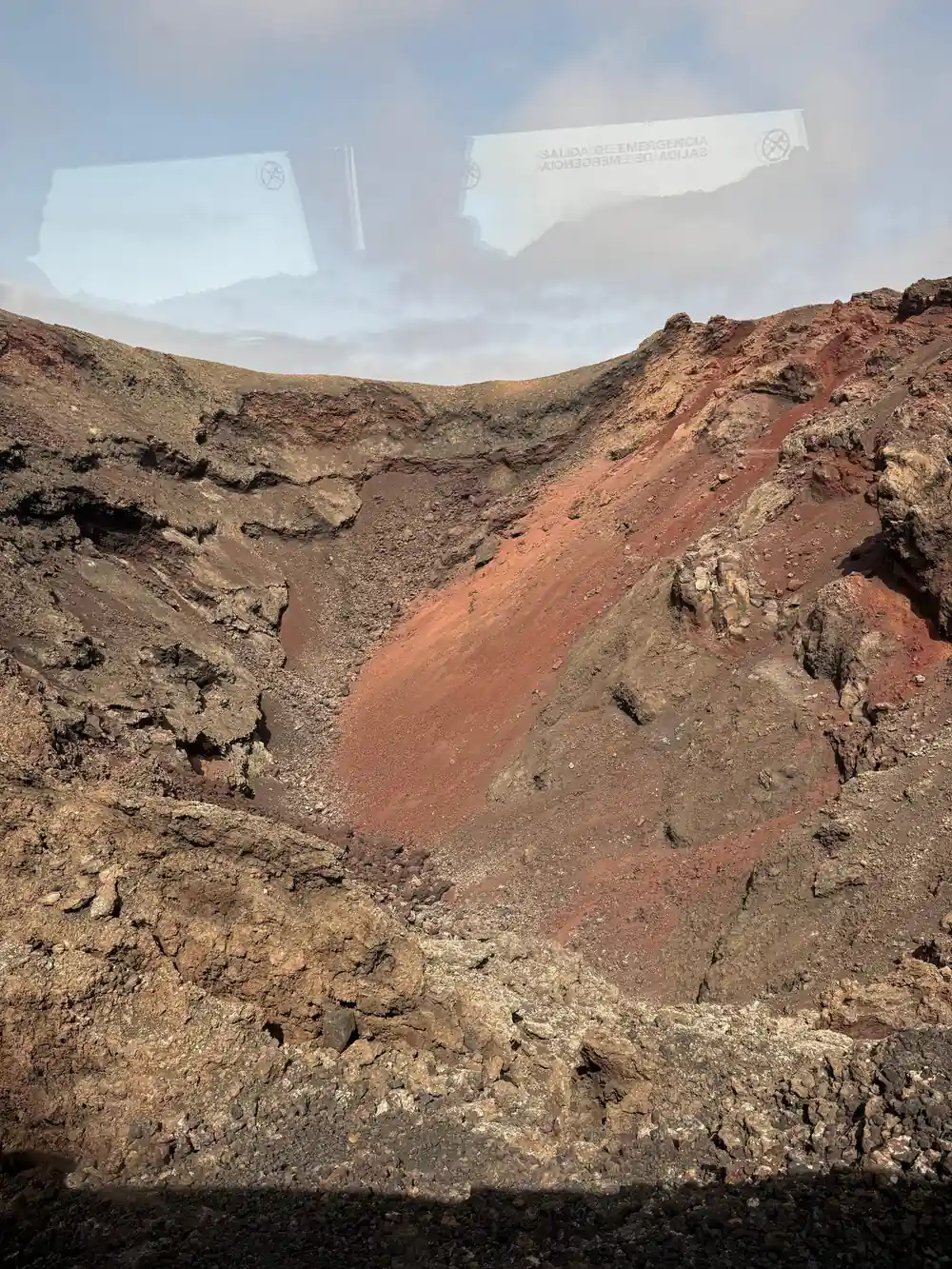
The rock underfoot in Timanfaya is basalt, a dark volcanic stone that takes its colour from iron and magnesium minerals. Where it has been weathered or altered by heat it turns the ochre, orange and deep red that visitors photograph, and the same stone builds the cones and the broad sheets of lava you drive across. Olivine, a green mineral, appears in some of the island's volcanic rock, and geologists look for it when they compare one volcanic region with another. Walking here, you read the surface with your eyes, the grain of the ash and the way the rock breaks underfoot.
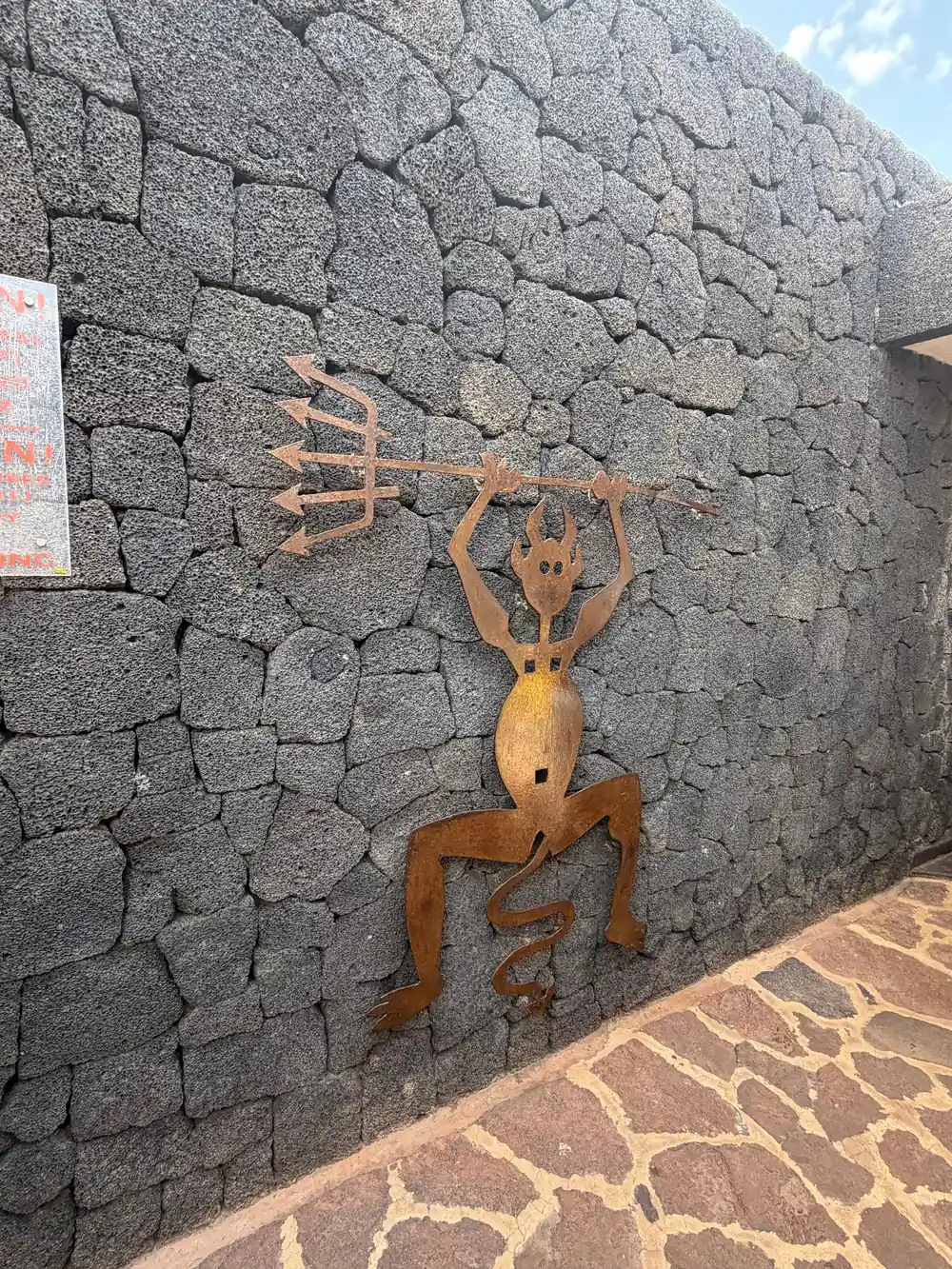
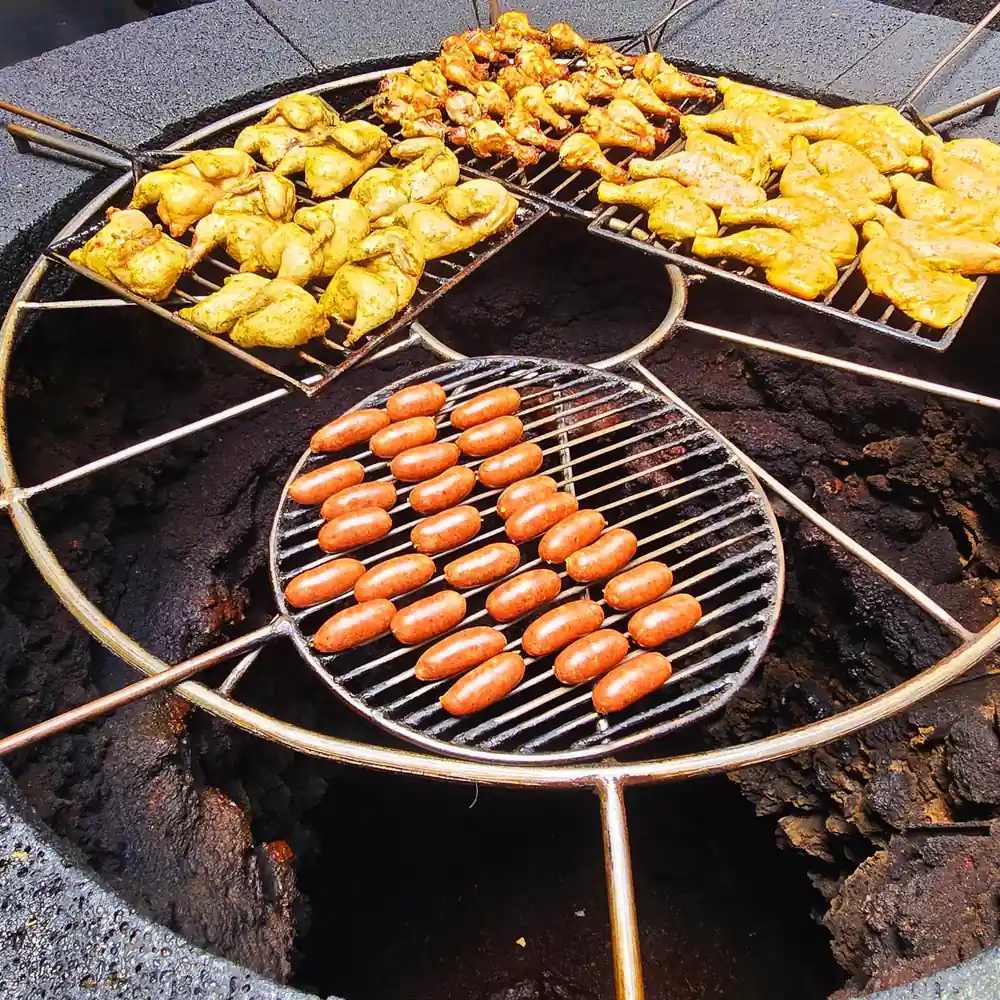
Walking over a lava field, you notice how many different surfaces one eruption can make: smooth ropy sheets, jagged blocks, loose cinders and cones built from ash. Geologists use those differences to work out how runny the lava was, how much gas it carried and how the eruption behaved. Guides do the same thing out loud as they go, naming what you are standing on and pointing out the clues. The heat is not only historical: El Diablo Restaurant cooks over a volcanic oven that uses natural heat from the subsoil, where temperatures exceed 600 °C just 15 meters below the surface.[8]
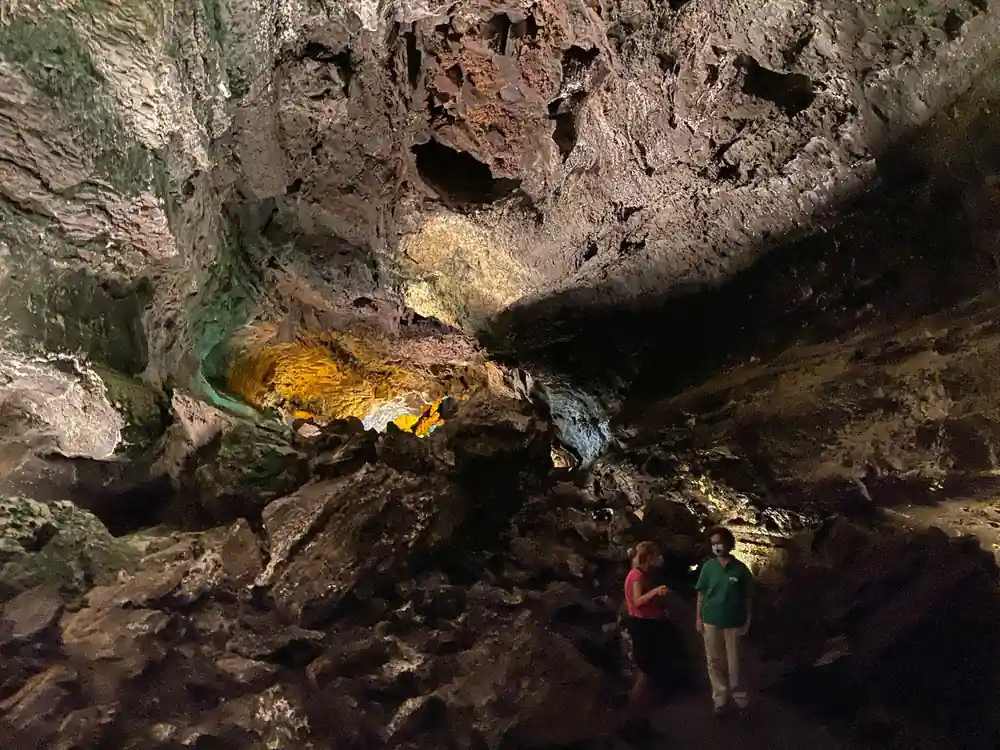
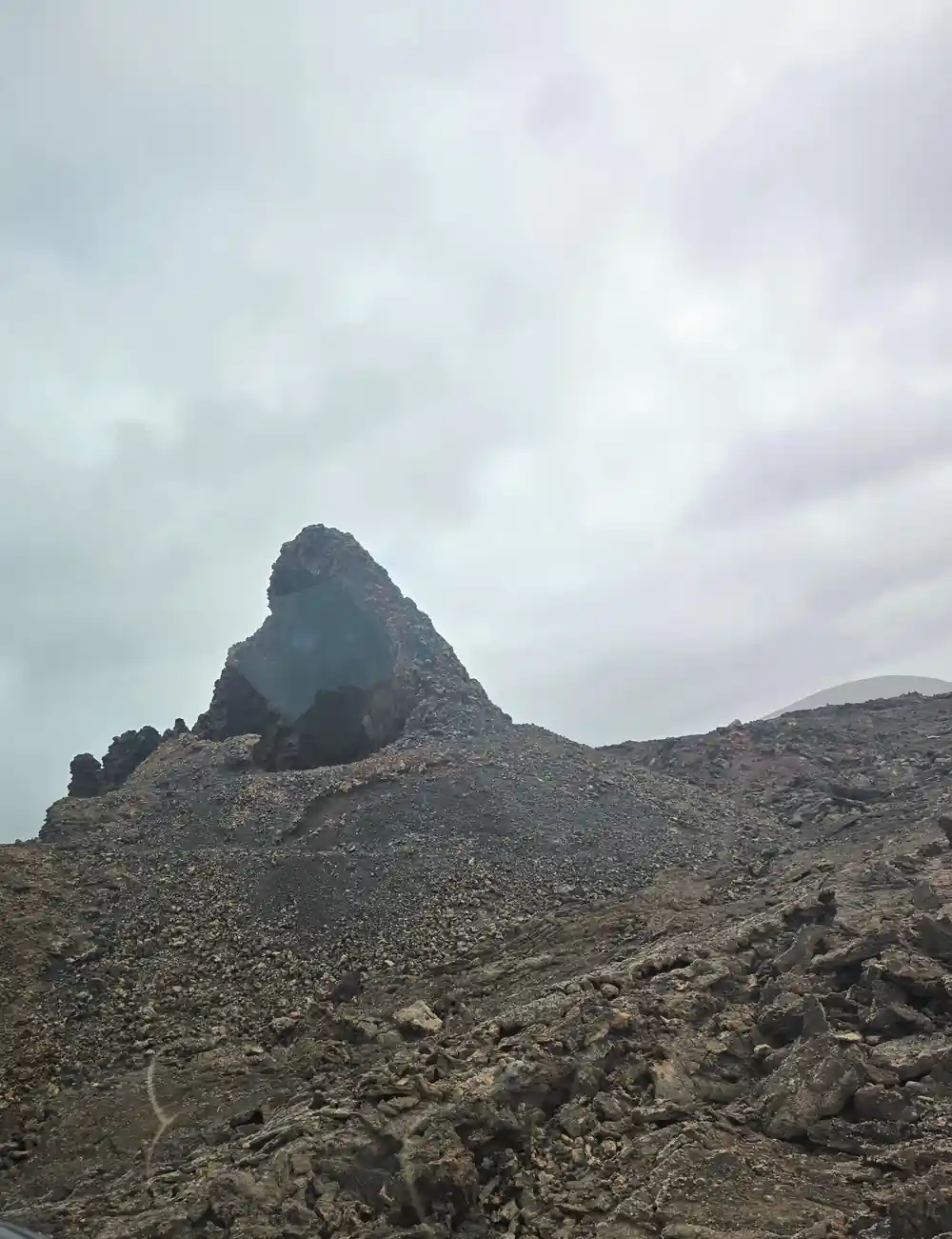
Dark lava in the Fire Mountains, where films set on other planets were made.
Lava Tubes as Models for Lunar and Martian Habitats
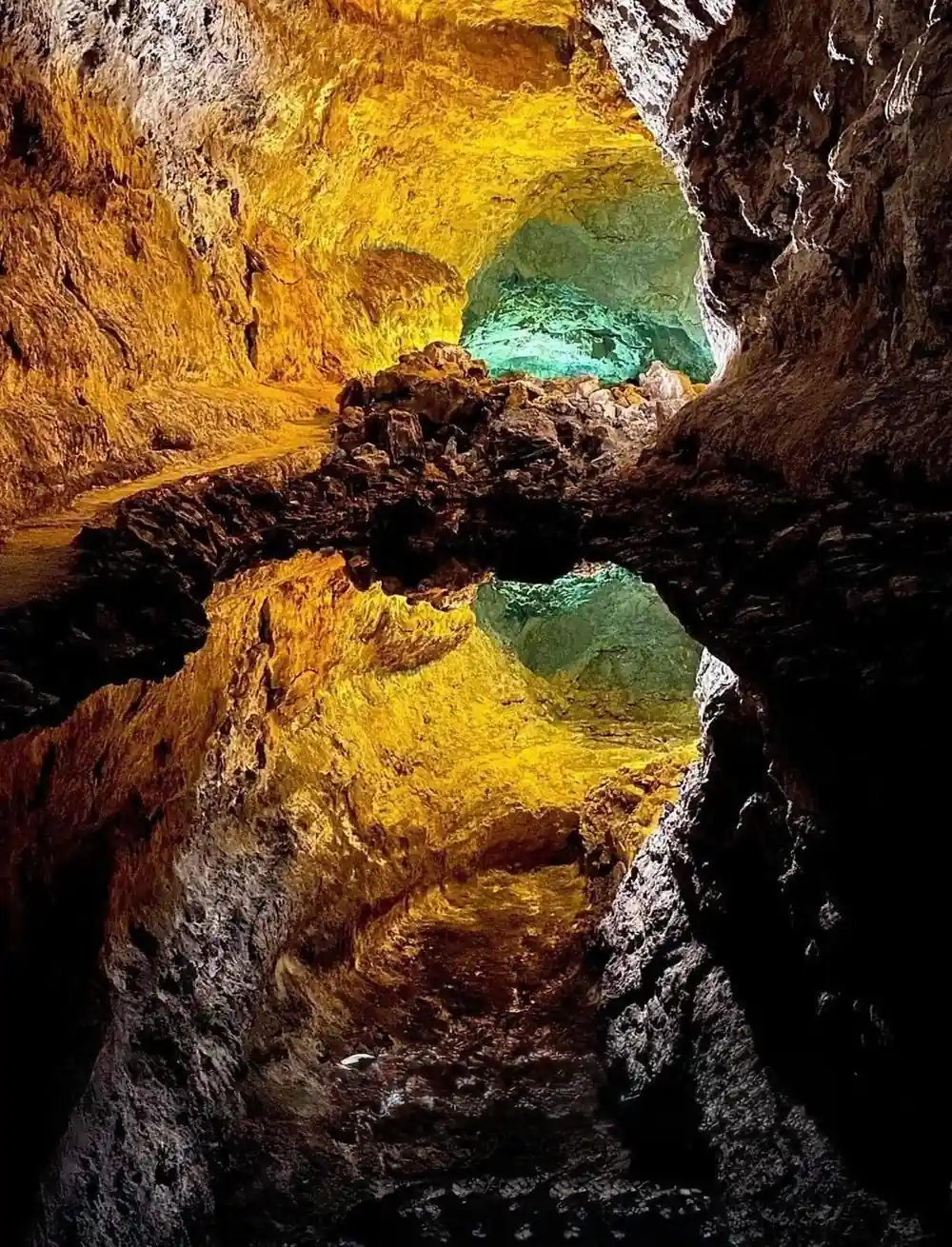
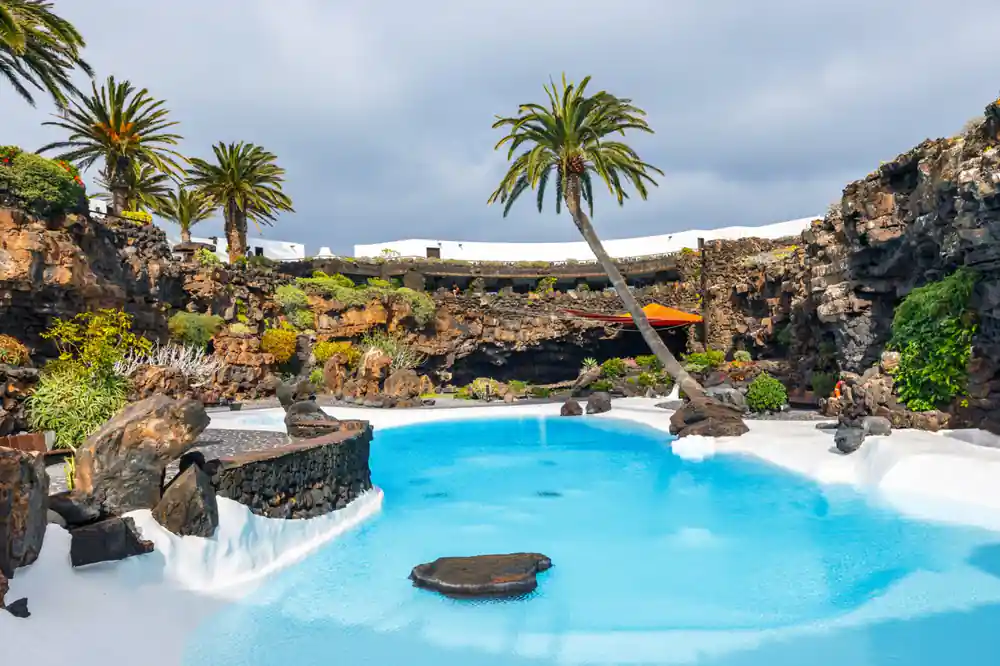
Lava tubes form when the outside of a flow cools and hardens while molten rock keeps running inside. When the eruption ends, the channel drains and leaves a tunnel behind. Lanzarote has long ones, and two of them sit on this itinerary: Cueva de los Verdes and Jameos del Agua are both listed as stops on the 9 hour tour.[2] Underground, the air is still, the daylight disappears and the temperature drops. The walls change from rough black to smooth, glassy brown where the lava ran, and the quiet is a big part of the experience.
Lava tubes are studied as possible shelter for future exploration, with a roof of rock standing between whoever is inside and conditions on the surface. You do not need the science to enjoy them. The tunnels are cool, quiet and strange after the glare above, and steps and walkways carry visitors through while a guide explains how each section formed as the flow drained away. It is the part of the day that feels least like the surface and most like somewhere else entirely.
Films Shot in Timanfaya's Fire Mountains
Film makers have been drawn to the same empty, otherworldly ground. Several films inspired by other planets have been filmed in Timanfaya, including Enemy Mine, Krull, Mission Stardust, Stranded and Operation Ganymed.[9] The park stands in for deserts, moons and distant planets with almost no set dressing at all, which is exactly what a location scout hopes to find. A black cone, a field of ash and a horizon with nothing on it can read as another world on camera.
Part of the appeal is the light. There are no trees, hedges or power lines to break a wide shot, and the pale ash throws brightness back up into the frame. The ground is protected, so the coach route and the marked paths are where visitors stay, and that keeps the surfaces you came to see in the state the film crews found them. The Route of the Volcanoes itself runs by coach, and the park's coaches are adapted for mobility.[10]
from US$102
The Timanfaya Park, Jameos Agua and Cueva Verdes tour runs for 9 hours, skips the ticket line and has pickup included.[2]
Timanfaya National Park Photos: What to Shoot
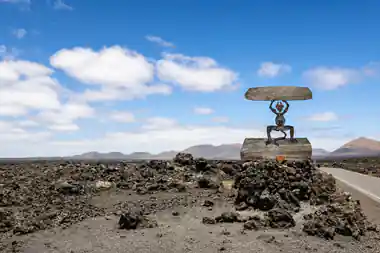
The photographs people bring home from the Fire Mountains tend to be of the same few things: fields of orange and brown ash that look like dunes, a dark road winding through red volcanic rock, and the sculpture of a figure holding a disk that stands in the lava beside the road. The light does most of the work. Early and late in the day the low sun rakes across the cones and pulls the colour out of them, while in the middle of the day the ground is so bright that cameras struggle to hold the detail.
A few habits help. Set your exposure for the bright ground rather than the dark rock, keep a cloth handy for dust and spray, and watch your footing when you step off the coach, where the surface is loose in places. Once the sun is high, shade is scarce, so a hat and water matter as much as a lens does. This is a protected National Park, so stay with your group on the marked ground and let the guide lead the way.
Timanfaya National Park Video and the Visitor Centre
Video from the park is mostly about texture and movement: the shimmer of heat over dark rock, ash lifting in the wind, the slow turn of the coach route as the cones slide past the window. The ground here is hot close to the surface, with temperatures reaching around 250 ºC at Islote de Hilario,[3] and ordinary looking gravel can be far warmer than it seems. Keep clips short and steady, and let the guide's commentary carry the story instead of trying to film everything at once.
It is worth starting at the Centro de Visitantes e Interpretación de Mancha Blanca, which gives free access to an exhibition and an audiovisual programme about the park.[11] It is open Monday to Sunday from 9:00 to 16:00.[4] The films there set up the eruptive period of 1730 to 1736, the same span the Termesana Route explores, bringing visitors close to the volcano and to the culture of Lanzarote's inhabitants at that time.[12] Seeing that first makes the drive through the lava fields far easier to read.
What This Tour Includes and How to Prepare
The tour booked from this site is the Lanzarote: Timanfaya Park, Jameos Agua, & Cueva Verdes Tour, from US$102.[2] It lasts 9 hours, with pickup included and a live guide in English, French, German or Spanish, and it skips the ticket line.[2] You can reserve now and pay later, and free cancellation is available up to 24 hours in advance for a full refund.[2] The stops are Timanfaya National Park, Cueva de los Verdes and Jameos del Agua, with 61 pickup location options around the island.[2]
Bring comfortable shoes, water, a hat and a thin windproof layer; the caves are cooler than the open lava fields and the wind on the ash plains can be sharp. If you are travelling under your own steam instead, tickets for independent entry to Montañas del Fuego can only be purchased online and for a specific time slot, and the standard adult ticket costs 30.00 EUR.[13][14] Puerto del Carmen and the park are about 22 km apart directly, with a road distance of about 23.5 km,[15] and bus line 60 passes through Yaiza between Arrecife and Playa Blanca.[16] At the camel station beside the park, the ride lasts approximately 20 minutes.[17]
Heat under the Fire Mountains
Values stated by[3] for Islote de Hilario and by[8] for the subsoil heat used by El Diablo Restaurant.
From-prices for a Timanfaya day out
US dollar from-prices of GetYourGuide listings[2][5][6][18]
When to go into the Fire Mountains
Plan your Timanfaya day
Pick your day
Choose the pickup point closest to where you stay; there are 61 options around the island.[2]
Pack light and warm
Sun cream, a hat, water and a thin windproof layer cover most of the day; the caves are cooler than the lava fields.
Keep your camera ready
Charge batteries and clear space on your card; the ash fields, the winding road and the cave pools fill a memory card quickly.
Meet the guide on time
Pickup is included, so check availability for the details of your point and be waiting a few minutes early.[2]
Slow down underground
Cueva de los Verdes and Jameos del Agua are dark and uneven in places; take the steps steadily and let your eyes adjust.
Ride the Route of the Volcanoes and walk into two lava tubes
from US$103Reserve now & pay later